
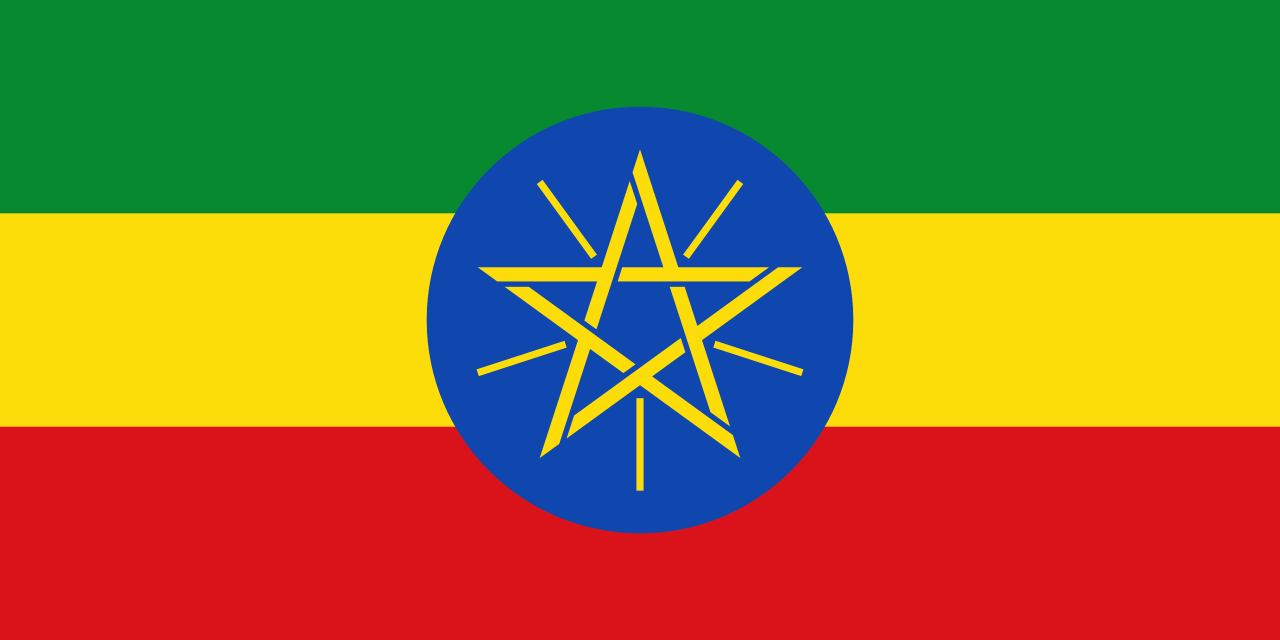
Red, gold and green may be the most recognised colour combination in reggae culture, yet almost everything about where the colours actually come from gets tangled in the telling. They are often credited to a single flag, a single man or a single moment, when in truth they travelled: from Ethiopian church pennants and an imperial battlefield, through a Harlem convention hall that deliberately chose different colours of its own, and across the Atlantic in photographs, newspapers and song until they settled on Jamaica and became the everyday dress code of a faith. This is that journey, traced in order — where each colour set began, how the two sets differ, and how they ended up woven together in the clothes people wear today.
Key Takeaways
- The Rasta colours descend from the Ethiopian tricolour: green, gold (yellow) and red pennants flown in Ethiopia long before a rectangular national flag existed.
- Emperor Menelik II combined the pennants into a single tricolour in 1897, a year after Ethiopia’s victory at Adwa preserved its independence while most of Africa was colonised.
- The imperial banner placed the Conquering Lion of Judah at its centre, tying the colours to Ethiopia’s Solomonic royal line.
- Marcus Garvey’s UNIA adopted a different flag in 1920 — red, black and green — with black, not gold, in the middle. The two flags are cousins, not twins.
- The 1930 coronation of Haile Selassie I carried Ethiopian imagery into Jamaican religious life, and reggae later carried the colours to the world.
Table of Contents
- Ethiopia Before the Flag
- Adwa and the Tricolour of 1897
- The Lion of Judah Banner
- Garvey and the Red, Black and Green
- Two Flags, One Persistent Confusion
- The 1930 Coronation and Jamaica
- Kingston and the World
- Wearing the History Today
- Our View
- Frequently Asked Questions
- Sources
- Recommended
Ethiopia Before the Flag
Long before red, gold and green appeared on a knitted tam or a festival flag, the three colours were already flying in Ethiopia — not as a rectangular national flag, but as separate pennants carried in procession and war. Ethiopia’s own tradition, recorded in the rainbow tradition described by Encyclopaedia Britannica, identifies the green-yellow-red banner with the rainbow God set in the heavens after the Flood in the book of Genesis. That is a striking place for a flag to begin: not in a herald’s office or a design competition, but in scripture, in a country where church and crown had been intertwined for centuries and where coloured pennants were part of religious and military life well before any European-style flag code existed.
The detail matters because it corrects the most common misunderstanding about the Rasta colours. They were not invented for the Rastafari movement, and they were not invented in Jamaica. They were not even, at first, a flag in the modern sense. They were three colours with a settled place in Ethiopian public life, displayed as pennants before the first official flag was established. When later generations in Jamaica reached for a visual language of African dignity, they did not have to create one from nothing. Ethiopia had been speaking it for generations, in cloth, in church processions and on campaign.
Ethiopia could play that role for one simple reason: it had survived. While the map of Africa was being redrawn by European empires, Ethiopia remained an independent African state ruled by its own emperors, with its own ancient Christian church, its own written language and its own court rituals. For people of African descent in the Americas, whose histories had been deliberately severed, an unconquered African kingdom with a crowned king and a recognisable banner was more than a country. It was proof — visible, flag-shaped proof — that African sovereignty was real and had endured. The colours drew their power from that survival long before anyone outside Ethiopia wore them.
Adwa and the Tricolour of 1897
The pennants became a flag because of a war. In the 1890s Italy, established in neighbouring Eritrea, pressed a disputed treaty reading that would have made Ethiopia an Italian protectorate. Emperor Menelik II rejected the claim, mobilised an army drawn from across his empire, and met the Italian invasion in the northern highlands. The resulting Battle of Adwa, fought on March 1, 1896, ended in a decisive Ethiopian victory that Britannica describes as the first crushing defeat of a European power by African forces during the colonial era. The Treaty of Addis Ababa that followed recognised Ethiopia’s full sovereignty, and Menelik’s standing at home and abroad rose accordingly.
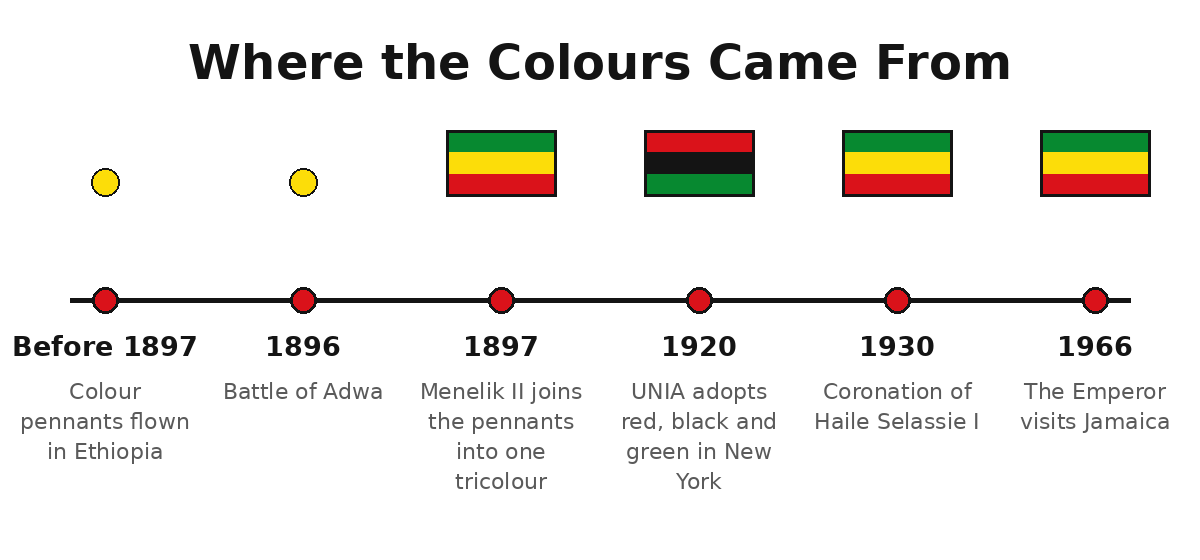
A year after Adwa, the colours took their modern form. Britannica’s flag history records that pennants of the three colours had been displayed before Emperor Menelik II established the first official flag on October 6, 1897, bearing the first letter of his name in Amharic script on the yellow stripe. Other flag references date the combined rectangular tricolour to October 11, 1897; the small difference in the recorded day matters far less than the sequence, which is not in dispute — victory first, then a single rectangular banner joining what the pennants had carried separately. The order of the stripes also settled over time: red originally rode on top, and the arrangement later flipped to the green-over-gold-over-red order recognised today.
Because Ethiopia kept its flag while other African nations were still colonies, its colours became a template far beyond its borders. The CIA World Factbook notes that Ethiopia’s three main colours were so often adopted by other African countries on independence that they became known as the Pan-African colours. Ghana, Cameroon, Senegal, Mali and many others would eventually raise green, gold and red in some order, each time nodding, consciously or not, toward the one African state that had never had to ask permission to fly them. Every one of those later flags is part of this story’s family tree, and the Rastafari use of the colours sits on the same branch: an Ethiopian inheritance, adopted in admiration.
The Lion of Judah Banner
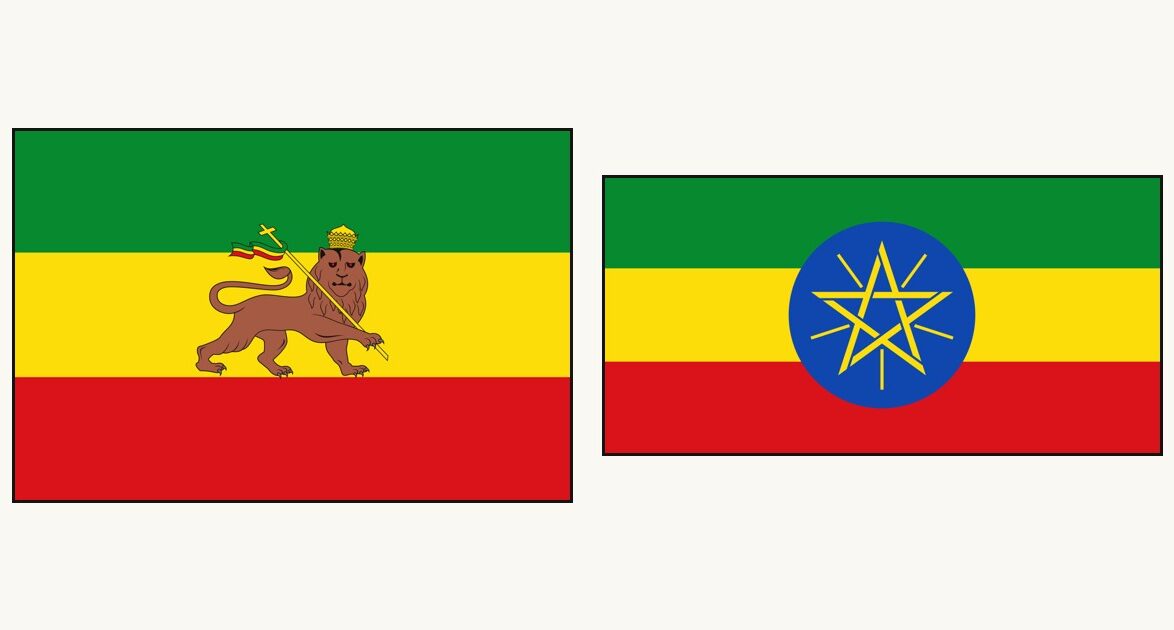
A plain tricolour, however, was only half of the imperial image. For official purposes the Ethiopian banner carried a device at its centre: the Conquering Lion of Judah, a crowned lion holding a staff topped by a cross, with ribbons in the three national colours. Britannica explains that the lion asserted a specific claim — that Menelik I, the legendary first emperor, had been the son of the Queen of Sheba and the biblical King Solomon — and with it the claim that Ethiopia’s emperors ruled in an unbroken Solomonic line. The first legal definition of the lion flag followed in November 1932, shortly after Haile Selassie’s coronation, and the banner remained in use until the empire fell in 1974, apart from the years of Italian occupation.
This is why the lion, and not just the stripes, saturates Rastafari imagery. The colours say Ethiopia; the lion says which Ethiopia — the Solomonic kingdom, the throne of David’s line transplanted to Africa. Our companion history of the Lion of Judah in Rastafari culture follows that symbol in full, and the related guide to the Ethiopian coat of arms shows how the imperial emblems fit together. For the origins of the colours themselves, the point to hold onto is the pairing: in imperial use, tricolour and lion were one statement, cloth and crown together, and it was that combined image — flag, lion, emperor — that the outside world received.
It was also the image attached to a person. When Ras Tafari Makonnen was crowned emperor on November 2, 1930, taking the throne name Haile Selassie I, he inherited the banner, the lion title and the Solomonic story in a single ceremony staged for maximum international attention, with foreign delegations and press in attendance. Britannica notes that he was afterwards regarded by the Rastafari movement as the messiah of the African race. The colours now had a living face, a coronation date and newspaper photographs that could cross an ocean — which is exactly what they did, though not before another flag entered the story from an entirely different direction.
Garvey and the Red, Black and Green
Marcus Garvey was born in St Ann’s Bay, Jamaica, in 1887, and on August 1, 1914, in Kingston, he founded the UNIA — the Universal Negro Improvement Association — dedicated to racial pride, economic self-sufficiency and an independent Black nation in Africa. The organisation found only a modest following in Jamaica, so Garvey carried it to Harlem in 1916, where it caught fire. The UCLA Marcus Garvey and UNIA Papers Project records that by 1920 the UNIA had hundreds of chapters worldwide, hosted elaborate international conventions and published the Negro World, a weekly so influential it was soon banned in many parts of Africa and the Caribbean. Garvey understood earlier than almost anyone that a scattered people needed shared symbols — a shipping line, an anthem, uniforms, titles — and above all, a flag.
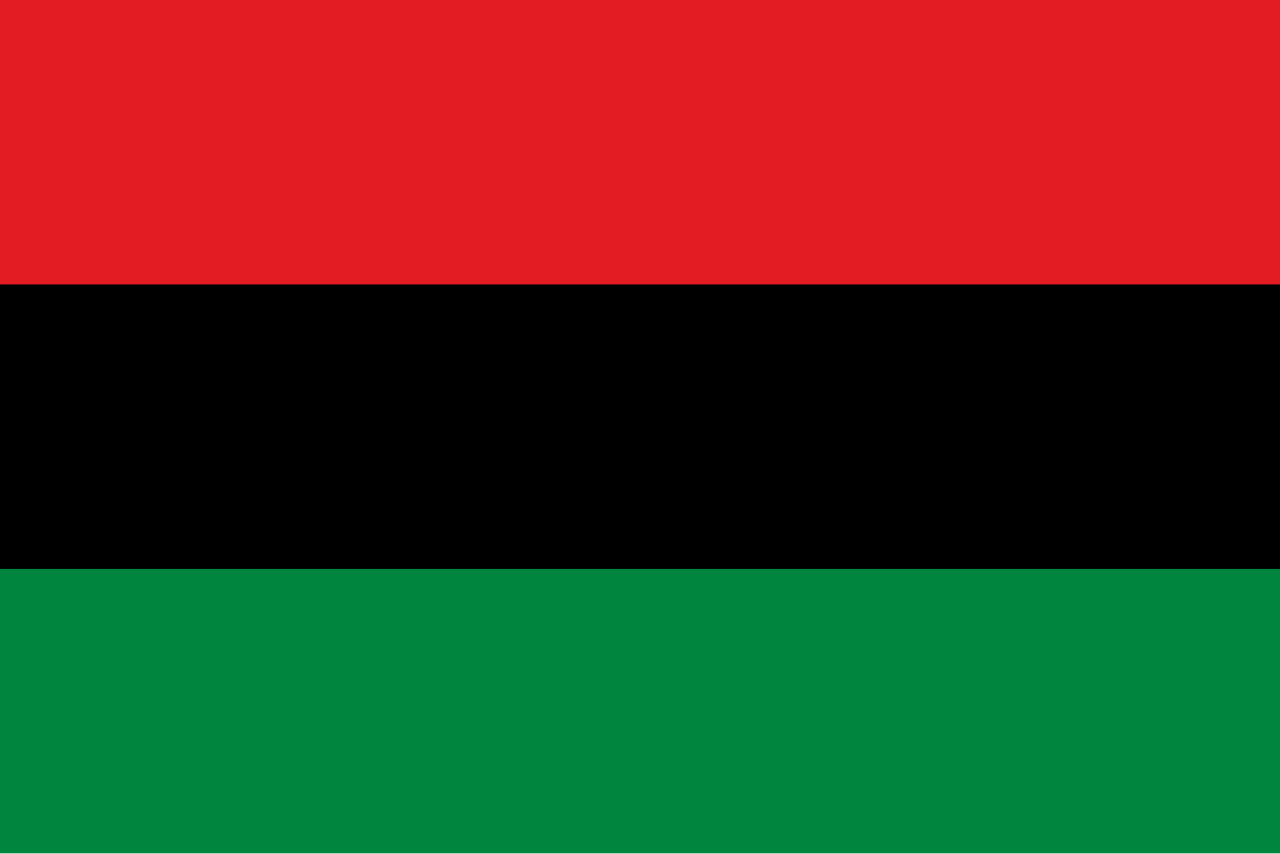
On August 13, 1920, during its month-long convention at Madison Square Garden in New York, the UNIA formally adopted its flag in Article 39 of the Declaration of Rights of the Negro Peoples of the World. The association’s own history records the meanings it assigned: red for the blood that unites all people of Black African ancestry and was shed for liberation; black for Black people themselves, a nation affirmed by the flag’s existence; and green for the abundant natural wealth of Africa. The flag was, in part, a direct rebuttal — created in response to a popular racist song of the era built on the taunt that every race had a flag except one. Garvey’s answer was to give his movement a banner and dare anyone to repeat the taunt.
Notice what Garvey did not do. He did not copy Ethiopia’s flag. His middle stripe is black, not gold, and the difference was deliberate: where Ethiopia’s banner spoke of a kingdom, Garvey’s spoke of a people — their blood, their skin, their land. As Smithsonian Magazine’s account of the National Museum of African American History and Culture explains, the Black Liberation Flag created in 1920 by Garvey and UNIA members was meant to mobilise and unite the whole African diaspora, and its colours proved so durable that artist David Hammons could rebuild the American flag itself in red, black and green seventy years later and be instantly understood. Two colour systems were now in circulation — Ethiopia’s green, gold and red, and Garvey’s red, black and green — both pointing at Africa, both carried by Black pride, and destined to be braided together in Jamaica.
Two Flags, One Persistent Confusion
Because the two flags share red and green and differ only in the middle stripe, they are constantly mistaken for each other, and the mistake flattens the history. Set them side by side and the distinction is clean. Ethiopia’s is a national flag: green over gold over red, born from pennants, formalised in 1897, centred for decades by the Lion of Judah and centred today by a blue disc and gold star, which the Factbook records was added in 1996. Garvey’s is a movement flag: red over black over green, adopted in 1920 by a diaspora organisation that held no territory and ruled no state, which was precisely its point — a nation without a country could still have colours.
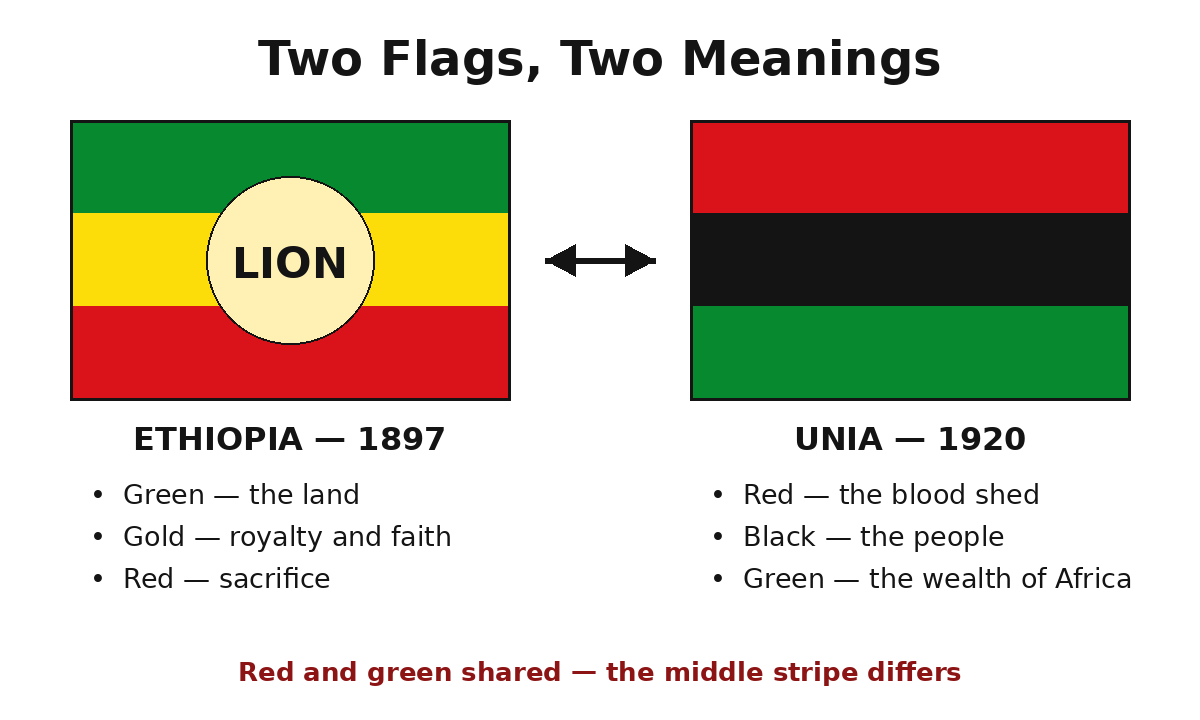
Rastafari dress draws on both, which is why the combination so often appears as four colours rather than three. Britannica’s survey of Rastafari livity describes adherents dressing in red, green, gold, and black, a four-colour palette that only makes sense once you see the two flags behind it: gold from Ethiopia’s imperial banner, black from Garvey’s liberation flag, red and green common to both. Neither flag cancelled the other out. In Jamaica they layered — the kingdom’s colours and the movement’s colours worn together, each correcting the other’s story. If you want the colour-by-colour symbolism of that combined palette, our earner guide to what the Rasta colors mean is the place to go; this history simply insists that the palette has two birth certificates, one Ethiopian and one Garveyite, and honesty about the colours starts with keeping both.
There is a practical payoff to getting this right. A tam in green, gold and red honours Ethiopia and its emperor. A design in red, black and green quotes Garvey and the liberation movement. A garment carrying all four colours — the most common Rastafari arrangement of all — is making the full statement: kingdom and people, Addis Ababa and Harlem, crown and diaspora. Wearers have always known the difference instinctively, even when outside commentators lumped every combination together as a generic reggae rainbow. The colours were never generic. Each stripe was argued over, adopted by vote or by decree, and carried at real cost by the people who first raised it.
The 1930 Coronation and Jamaica
The braid tightened on November 2, 1930. Ethiopia’s regent, Ras Tafari Makonnen, was crowned Emperor Haile Selassie I in Addis Ababa in a ceremony reported around the world. In Jamaica, the news landed in soil Garvey had already tilled. As Smithsonian Magazine’s history of the movement recounts, Garvey had frequently cited Psalm 68:31 — the prophecy that princes would come out of Egypt and Ethiopia would stretch out her hands to God — and had taught his followers to watch for a saviour crowned in Africa. When the coronation came, Jamaican preachers such as Leonard Howell read it as that prophecy fulfilled: the crowned king was African, his banner was the lion tricolour, and his precoronation name, Ras Tafari, gave the new faith its name.
What formed in Jamaica in the 1930s was therefore never just an Ethiopian fan club, and never just a Garveyite study circle. It was a new religious movement that fused the two inheritances: Garvey’s pan-African pride and organisational example, Ethiopia’s living king, flag and church, and the King James Bible read through the experience of slavery and colonial Jamaica. The colours fused with them. To wear green, gold and red in 1930s Kingston was to declare allegiance to an African king most Jamaicans would never see, in defiance of a colonial order that treated the wearers as outcasts. To add Garvey’s black was to declare the other half of the creed — that the people wearing the colours were themselves the nation the flags described.
None of this arrived from nowhere. The reading of Ethiopia as a promised land — sometimes called Ethiopianism — had circulated among enslaved and free Black Christians in the Americas for well over a century before Garvey, anchored in that same psalm and in the sheer fact of an African Christian kingdom still standing. Garvey gave the longing an organisation, a newspaper and a flag. The coronation gave it a date, a face and a photograph. Jamaica, where both currents ran strong and where colonial hardship gave them urgent local meaning, is simply where the two rivers met — and the colours show the confluence to this day.
The decades that followed tested that declaration hard. Early Rastafari were beaten, shaved, jailed and driven from place to place, and the movement’s own memory keeps those years close; our collection of Haile Selassie quotes gathers the words Jamaican believers carried through them. Italy’s invasion of Ethiopia in 1935 and the emperor’s exile and return bound Jamaican sympathies tighter still, because the flag under attack in Africa was now, in a real sense, their flag too. By the time Jamaica approached its own independence in 1962, the colours had completed the hardest part of their journey: they no longer needed Ethiopia’s permission or Garvey’s organisation to survive. They lived on Jamaican heads, shoulders and banners, as ordinary — and as charged — as clothing gets.
Kingston and the World

On April 21, 1966, the journey came full circle in a single afternoon. Haile Selassie arrived in Jamaica on a state visit, and the Jamaica Information Service records that 100,000 Rastafari descended on Palisadoes Airport in Kingston with drums and chalices to meet him — a crowd so vast the day is still kept as Groundation Day, which our guide to Groundation Day covers in depth. The emperor whose flag they had worn for three decades stood on Jamaican soil and treated the outcasts of Jamaican society with respect, and the Service notes the visit gave Rastafari a measure of respectability for the first time — and that the reggae music carrying the movement, colours and all, then became commercially viable and spread worldwide.
Reggae was the colours’ second ship, after Garvey’s newspapers and the coronation photographs. Britannica’s biography of Bob Marley describes how the Wailers’ Rastafari faith shaped their music and how, after signing to Island Records and releasing Catch a Fire, their reggae gained a global audience — an audience that met the music wearing its colours, on album sleeves, stage clothes and Marley’s own crocheted caps. The companion history of Jamaica’s impact on the spread of Rastafarian culture traces that export in full, and our look at reggae colors follows the palette onto stage and vinyl. Sayings travelled with the cloth, too — the blessing explored in Who Jah Bless, No Man Curse moved from scripture to lyric to everyday speech on the same route.
By the end of the twentieth century the circuit was complete. Colours that began as Ethiopian pennants could be bought on a market stall in London, worn at a festival in California or painted on a wall in Kingston, and at every stop someone could still tell you the whole chain: Adwa, Menelik, the lion, Garvey, the coronation, Kingston, Marley. Few design palettes in the world carry a documented itinerary like that. The colours did not drift into global culture by accident or by fashion. They were carried, deliberately, by an empire defending itself, a movement organising itself and a faith refusing to disappear — and each carrier left the palette slightly richer than they found it.
Wearing the History Today
All of which raises a fair question for anyone who wears the colours now: what, exactly, are you putting on? The honest answer is a layered statement, and the layers are the point. Green, gold and red alone salute Ethiopia — its land, its crown, its unconquered history. Red, black and green alone quote Garvey’s liberation flag. The full four-colour arrangement, the one knitted into tams, woven into belts and printed across traditional Rasta outfits that still hold their shape today, states the whole Jamaican synthesis at once. None of these is a costume. Each is a citation, whether the wearer spells it out or not.
How the citation gets worn has its own grammar, and it differs by wearer and occasion. Our styling guides walk through it piece by piece — how to dress like a Rastafarian woman and what Rasta men wear both start from the colours and build outward to fabric, fit and setting — while the deeper roots of the cloth itself reach back through the traditions surveyed in ancient West African clothing. The through-line across all of it is intention. In a culture where a middle stripe — gold or black — can change a flag’s entire meaning, choosing what to wear is a small act of history-keeping.
So wear the history accurately. Know that the gold is Ethiopia’s and the black is Garvey’s, that red ran on top of the first tricolour and green rides there now, that a lion once stood at the centre of the banner and a star stands there today. Know that the colours survived Adwa’s guns, Harlem’s printing presses, Kingston’s police raids and a century of being dismissed as mere decoration. Red, gold and green were never just a colour scheme. They are the visible residue of an argument — that African people had a past worth honouring and a future worth organising for — and the argument, stripe by stripe, is still being worn.
Our View
Most colour stories in fashion are marketing. This one is not. Red, gold and green earned their meaning the slow way — defended in battle, voted on in convention, preached in the street and sung to the world — and that is why they still stop people in a way a seasonal palette never will. Our view is simple: the colours deserve to be worn with their history attached. Gold for Ethiopia, black for Garvey’s people, red and green for the ground both flags share. Get the middle stripe right, and you have understood more real history than most textbooks manage.
— Rastafarian Clothing
Frequently Asked Questions
Did the Rasta colours come from Ethiopia or from Marcus Garvey?
From both, in sequence. Green, gold and red are Ethiopia’s colours, formalised as a tricolour in 1897. Marcus Garvey’s UNIA adopted its own flag — red, black and green — in 1920. Rastafari in Jamaica layered the two inheritances together, which is why the palette is so often worn as four colours: red, green, gold and black.
What is the difference between red, gold and green and red, black and green?
The middle stripe. Red, gold and green is the Ethiopian order, from the national tricolour that carried the Lion of Judah. Red, black and green is the UNIA liberation flag, where black stands for Black people themselves. They share red and green, point at the same continent, and mean different things.
When did Ethiopia adopt its tricolour?
The combined rectangular tricolour dates to 1897, under Emperor Menelik II, a year after the victory at Adwa. Britannica dates the first official flag to October 6, 1897; other flag references give October 11, 1897. The three colours had been flown as pennants long before either date.
Why is there a lion on so many Rasta flags?
The Conquering Lion of Judah stood at the centre of Ethiopia’s imperial banner and asserted the emperors’ claimed descent from Solomon and the Queen of Sheba. Because Rastafari honour Haile Selassie I, the last emperor to reign under that banner, the lion travelled with the colours into Jamaican religious art and dress.
Why do the colours appear in so many other African flags?
Because Ethiopia was the African state that stayed independent. The CIA World Factbook notes its three colours were adopted by so many countries on independence that they became known as the Pan-African colours — a deliberate nod to the one flag that had never been lowered to a colonial power.
Questions about the colours, the history or a piece in the shop?
We are glad to help you choose well and wear it accurately.
Sources
- Encyclopaedia Britannica, “Flag of Ethiopia” — Flag of Ethiopia
- CIA World Factbook, “Ethiopia” (Gov Archive) — CIA World Factbook: Ethiopia
- Encyclopaedia Britannica, “Battle of Adwa” — Battle of Adwa
- Encyclopaedia Britannica, “Haile Selassie I” — Haile Selassie I
- Encyclopaedia Britannica, “Marcus Garvey” — Marcus Garvey
- UCLA Marcus Garvey and UNIA Papers Project, “Marcus Garvey: An Overview” — Garvey Papers overview
- Universal Negro Improvement Association and African Communities League, “History of the Flag” — History of the Flag
- Smithsonian Magazine, “Smithsonian’s NMAAHC Acquires David Hammons’ ‘African American Flag'” — Smithsonian Magazine
- Encyclopaedia Britannica, “Rastafari” — Rastafari
- Smithsonian Magazine, “Rasta Revealed” — Rasta Revealed
- Jamaica Information Service, “Minister Grange Celebrates Rastafari Groundation Day” — Jamaica Information Service
- Encyclopaedia Britannica, “Bob Marley” — Bob Marley
Recommended
- The Meaning Behind the Lion of Judah in Rastafari Culture
- Traditional Rasta Outfits That Still Look Fly
- Exploring Jamaica’s Impact on the Spread of Rastafarian Culture



Leave a comment
Your email address will not be published. Required fields are marked *