

Dreadlocks are the most recognizable sign of Rastafari, and also the most misunderstood. To some they look like a hairstyle. To Rastafari they are a vow made visible: hair left uncut as a sign of a promise to God, a mark of separation from Babylon, and a crown a person grows rather than buys. This guide explains what dreadlocks mean in Rastafari, where the practice comes from in the Bible, how it traveled to Jamaica, and how it is lived and kept today — so that you can understand the locks before you admire them, and respect them whether or not you ever wear them.
Keep reading the story of the King the locks honor. Our guide to Coronation Day in Rastafari: November 2 and Why It Matters explains the crowning of Haile Selassie I, and our guide to Rasta Colors explains the red, gold and green that so often go with the locks.
Key Takeaways
- Dreadlocks are a vow, not a hairstyle. In Rastafari they point to the Nazirite vow of the Bible, in which the hair is left uncut as a sign of dedication to God.
- The Bible is the root. Numbers 6 forbids the razor during the vow, and Samson’s story in Judges 13 ties uncut hair to strength and calling.
- The locks came to Jamaica with a movement, not a fashion. They grew out of the early Rastafari community’s reading of Scripture, its reverence for Haile Selassie I, and its refusal of Babylon’s standards.
- They mean identity, resistance, and covenant. The locks say who a person belongs to, what they refuse, and what they promised.
- They take years and steady care. Locks mature in stages, and keeping them healthy is simple, regular work: washing, drying fully, palm-rolling new growth, and protecting them at night.
- Respect is the first rule. Never touch another person’s locks without asking, and never treat them as a costume.
Table of Contents
- What Dreadlocks Actually Are
- The Nazirite Vow: The Biblical Root
- From the Bible to Jamaica: How the Vow Reached Rastafari
- Haile Selassie, the Lion of Judah, and the Crown
- What Dreadlocks Mean: Identity, Resistance, and Covenant
- How Dreadlocks Grow and How They Are Kept
- Dreadlocks, School, Work, and the Law
- Wearing Dreadlocks Well: Respect, Care, and Style
- Myths Worth Letting Go
- Wear the Vow: Haile Selassie Pieces
- Our View
- FAQ
What Dreadlocks Actually Are
A dreadlock is a section of hair that has been allowed to mat and lock together into a rope-like strand. Unlike a braid, which is woven and can be undone, or a twist, which is coiled and temporary, a lock forms when the hair’s own texture binds it into a permanent shape. The process takes months, and the result can last a lifetime. Locks can be thin or thick, short or floor-length, worn loose, tied back, or covered with a tam. The word itself carries the old sense of dread — not fear of the hair, but awe: the dread of the Lord, and the dreadful power of a person who has set themselves apart. New World Encyclopedia’s Rastafari overview places the locks among the movement’s most visible signs of identity, alongside the colors and the lion.
That visibility is the point, and it is also the problem. Because locks are so easy to see, they are the first thing strangers judge, and the first thing people copy without understanding. A lock is not a costume piece, and it is not a shortcut to looking like a Rasta. It is a slow-grown sign that says its wearer has made a decision about how to live. When you see locks worn with a red, gold and green tam, the colors and the hair are saying the same thing together: roots, royalty, and resistance. Our guide to what Rasta men wear shows how the locks fit into the wider picture of dress, from the tam on the head to the colors on the chest.
It helps to be clear about what locks are not. They are not dirty hair. Clean locks are washed regularly, and neglect is not a spiritual practice — it is neglect. They are not a single style, either: the locks of an elder who has worn them for forty years look nothing like the starter locs of someone six months in, and both are real. And they are not exclusive to Rastafari. Locked hair appears in many cultures and faiths, from the sadhus of India to the Maasai of East Africa. What makes the locks Rastafari is not the technique but the meaning the wearer gives them — the vow behind them. That is where the story starts, and it starts in the Bible.
The Nazirite Vow: The Biblical Root
The root of the Rastafari lock is the Nazirite vow, set out in Numbers 6. A Nazirite was a person who set themselves apart for God for a time, and the vow had three marks: no wine or strong drink, no contact with the dead, and no razor on the head. The verse is plain: during the entire period of the vow, no razor may be used on the head, and the person must let the hair grow long. The uncut hair was the visible sign of the promise — the part of the vow everyone could see, and the part the wearer could not hide. To cut it was to break the sign.
The same rule reaches back further, to the priests. Leviticus 21:5 tells priests not to shave their heads, and the reason is the same: the body of a person set apart for God is not to be treated like any other body. Hair, in this reading, is not decoration. It is a boundary. It marks the line between the holy and the common, between the person who has promised and the world that has not. When Rastafari leave the razor alone, they are standing in that same line.
The most famous Nazirite in the Bible is Samson, whose story is told in Judges 13. Before he was born, an angel told his mother that the boy would be a Nazirite from the womb, and that no razor was ever to touch his head. His strength was tied to his hair, and when his hair was cut, his strength left him. Rastafari read that story as more than a tale about a strong man. They read it as proof that the vow is real, that the hair carries the promise, and that cutting it has a cost. Not every Rasta is a lifelong Nazirite in the strict biblical sense — the vow in Numbers was often for a set time — but the principle is the same: the hair is left alone because God asked for it to be left alone.
That is why the first thing to understand about dreadlocks is that they are not about fashion at all. They are about obedience. A person who grows locks in Rastafari is saying, in the most public way possible, that they have heard a command and intend to keep it. The locks are the receipt for that promise. They grow a little every day, and every inch is a day the vow was kept.
From the Bible to Jamaica: How the Vow Reached Rastafari
Rastafari began in Jamaica in the 1930s, in a community that read the Bible as its own history. The coronation of Ras Tafari as Haile Selassie I, Emperor of Ethiopia, in 1930 was the spark: here was a Black king crowned in Africa, and the community read his crowning as the fulfillment of prophecy. The movement’s early teachers, Leonard Howell among them, preached that Black people were the true Israelites, that Ethiopia was Zion, and that the Bible — read from the standpoint of the oppressed — was a book about them. In that reading, the Nazirite vow was not ancient history. It was an instruction, and it was waiting to be obeyed. New World Encyclopedia’s Rastafari overview traces how the movement’s beliefs, including its reading of the Bible and its reverence for Haile Selassie I, came together in those early years.
The locks themselves became common among Rastafari in the 1940s and 1950s, carried by the movement’s most committed members — the brethren who lived apart, ate Ital, and refused the ways of Babylon. For them, growing locks was a rejection of the colonial order: the straightened hair, the European dress, and the respectability that the plantation and the church demanded. To let the hair lock was to refuse to be groomed into someone else’s image. It was also a practical break. A person who will not cut their hair cannot be made presentable on Babylon’s terms, and that was the point. The locks made the refusal visible every day, in every room, to every policeman and employer. Smithsonian Magazine’s One Love describes how the movement’s symbols, including the locks, carried that refusal into the wider world.
The cost was real. In Jamaica in the 1950s and 1960s, Rastas were harassed, beaten, and jailed, and their locks were sometimes cut off by force — a punishment that struck at the vow itself. The community answered by holding tighter to the practice, and by the 1970s the locks had become the movement’s unmistakable signature, carried around the world by reggae and by the image of Bob Marley. What began as a small community’s act of obedience had become a global sign. The vow had traveled from the desert of Numbers to the hills of Jamaica to the stages of the world — and the hair had carried it the whole way. Our guide to Coronation Day in Rastafari tells the story of the crowning that set the movement in motion, and the Library of Congress country study of Ethiopia gives the history of the land the movement calls Zion.
Haile Selassie, the Lion of Judah, and the Crown
No account of the locks is complete without the King they honor. Haile Selassie I was crowned Emperor of Ethiopia on November 2, 1930, and Rastafari received his crowning as the fulfillment of prophecy — the King of Kings and Lord of Lords, the Lion of the Tribe of Judah, come in the flesh. Britannica’s Haile Selassie I biography records his life from his birth as Ras Tafari Makonnen in 1892 to his long reign and his place in Ethiopian history, and the Library of Congress country study of Ethiopia sets his reign in the wider story of the country he ruled. Our guide to the meaning behind the Lion of Judah in Rastafari culture explains why the lion became the movement’s emblem, and our collection of Haile Selassie quotes gathers his own words on peace, unity, and the dignity of Africa.
The lion matters to the locks because the locks, like the lion, are a royal sign. The Lion of Judah is the emblem of the tribe from which the kings of Ethiopia claimed descent, and the locks are worn as the mane of that lion — a crown that grows from the head instead of sitting on it. That is why the locks and the image of the lion so often appear together, on flags, on album covers, and on the chest of a shirt: the hair says the wearer belongs to the Lion, and the Lion says the wearer is royalty. The Smithsonian Libraries record preserves materials from the coronation era, and the Crown Council of Ethiopia continues to publish statements on the imperial tradition the movement honors. To learn why the King still matters so deeply, read why Haile Selassie still reigns in Rasta culture, what Haile Selassie taught us about spiritual leadership, and why Haile Selassie is still the King of Reggae.

What Dreadlocks Mean: Identity, Resistance, and Covenant
Ask ten Rastas what their locks mean and you will get ten answers that rhyme. Identity comes first. The locks say who a person is before they say a word: a child of Africa, a member of the house of Israel, a follower of the King. In a world that spent centuries telling Black people their hair was a problem to be fixed, the locks answer that the hair was never the problem. The problem was the standard. Growing locks is a way of taking the standard back into your own hands — or rather, of taking your hands off your hair and letting it be what God made it to be. EBSCO’s Rastafari movement overview describes the movement’s beliefs and practices, including the place of the locks among them.

Resistance comes second, and it follows from the first. The locks refuse Babylon — the system of empire, exploitation, and empty respectability that Rastafari name as the enemy. A person in locks cannot pass as respectable in Babylon’s offices and courts, and that is precisely the point: the locks make the refusal permanent and public. They are a picket sign you wear to work, to school, and to the shop. And covenant comes third. The locks are a promise, and a promise is a relationship. Every morning the wearer wakes up with the vow on their head, and every day they choose to keep it. That daily choosing is what makes the locks more than a style: they are a discipline, renewed each morning without a word being spoken. For the wider story of how faith is worn, see our guide to Rastafarian clothing styles with meaning and our guide to Rasta outfits for reggae lovers, where the locks meet the colors and the music.
How Dreadlocks Grow and How They Are Kept
Locks do not appear overnight. They grow in stages, and each stage asks for something different. In the beginning there are starter locs — twists, coils, or two-strand twists that hold the hair in sections while it begins to mat. This is the awkward stage: the hair looks unfinished, it frizzes, it unravels in the wash, and the temptation to give up is strongest. Then comes budding, when the sections begin to swell and tangle at the roots and the locks start to hold their shape. After a year or two, the locks mature: they tighten, they hang, they gain weight and length, and they need less fussing and more simple care. Patience is the whole method. The hair knows what to do; the wearer’s job is mostly to stay out of its way and keep it clean.
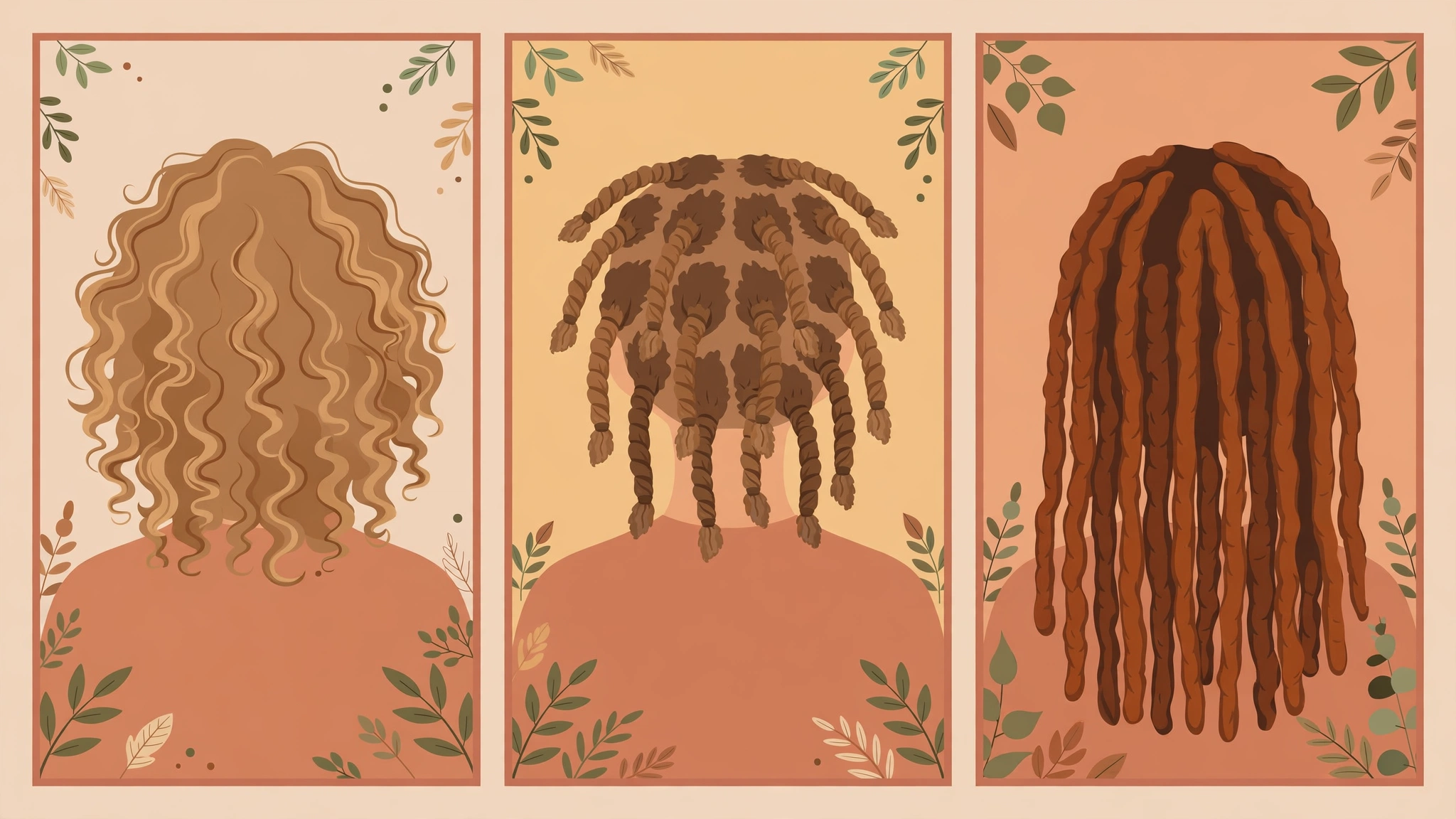
Keeping locks healthy is simple, regular work. Wash them — with a residue-free shampoo, so nothing builds up inside the lock. Dry them fully, because damp locks held against the scalp will smell and can grow mildew; a full day in the sun or a careful session with a dryer is not vanity, it is hygiene. Palm-roll the new growth, rolling each lock between the palms to help it tighten, and do it gently: hard pulling breaks hair and thins roots. Protect the locks at night with a silk or satin wrap or a durag, which keeps lint out and friction down. And keep the scalp in mind: a healthy scalp grows healthy locks, so oil it lightly, keep it clean, and leave it alone when it is not asking for help.
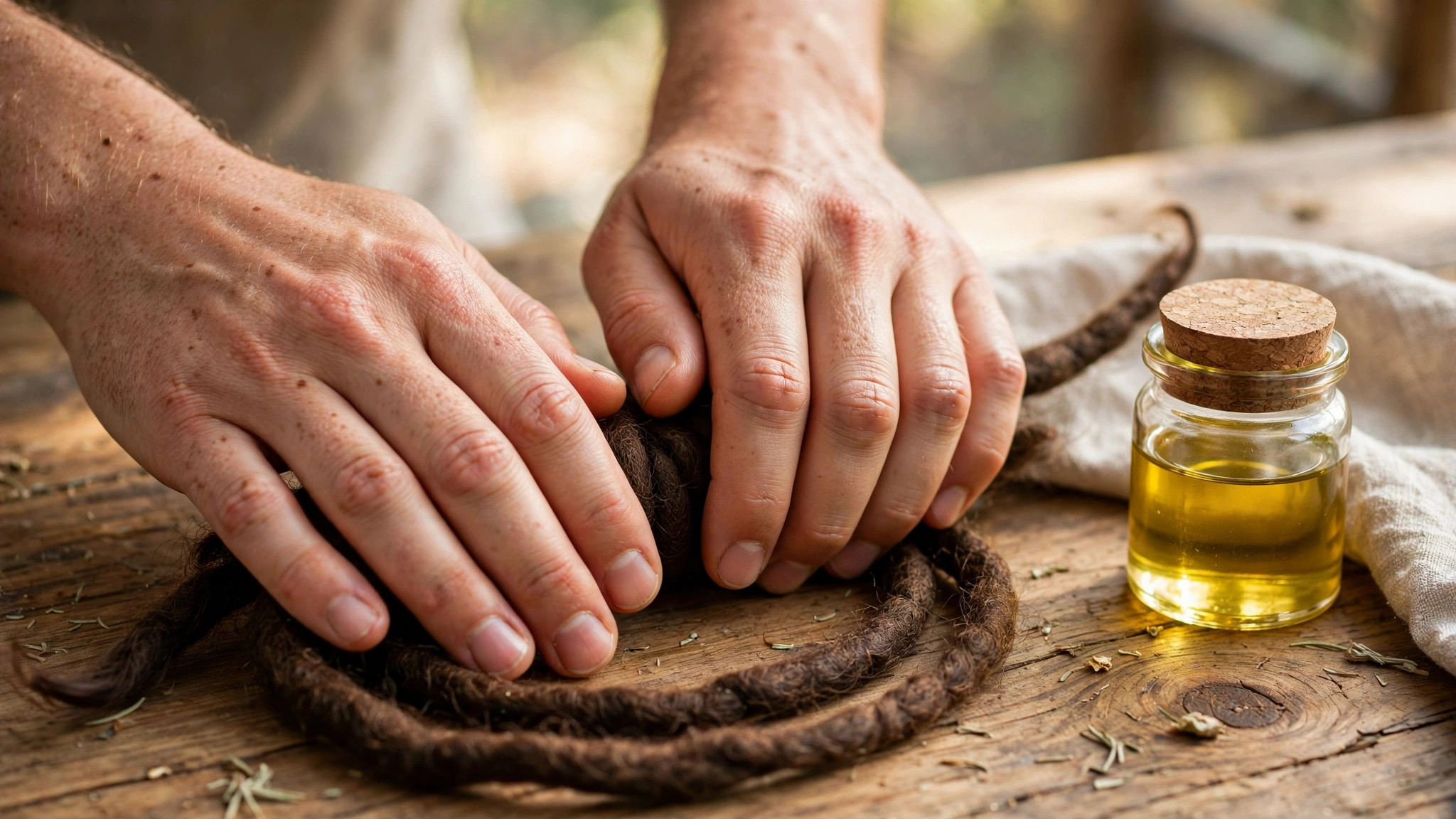
What to avoid matters as much as what to do. Heavy waxes and thick butters promise to lock hair faster, but they build up inside the strands and are almost impossible to wash out; a little light oil goes further. Tight styles that pull at the roots can cause thinning and breakage, and the damage is slow to heal. Bleach and harsh color lift the hair’s strength along with its color, and on locked hair the damage is hard to cut away. And never let anyone cut your locks without your say-so — the vow is yours, and the scissors belong to no one else. If your locks ever need real repair, find a loctician who respects the vow and the hair in equal measure, and who will tell you the truth about what can and cannot be fixed.
Dreadlocks, School, Work, and the Law
For most of their history, dreadlocks have been treated by schools, employers, and police as a problem to be solved rather than a faith to be respected. Children have been sent home from school for their hair. Workers have been told to cut their locks or lose their jobs. Travelers have been searched, stopped, and singled out because of the hair on their heads. The pattern is old, and it is not an accident: when a hairstyle marks a person as a member of a movement that refuses the established order, the established order notices. Smithsonian Magazine’s One Love shows how the movement’s symbols have been read by the wider world, and how that reading has so often been a misreading.
The law has been catching up, slowly and unevenly. In the United States, a growing number of states have passed laws against hair discrimination in schools and workplaces — laws often grouped under the name of the CROWN Act — and courts in several countries have recognized that a person’s hair can be an expression of faith and identity, not a grooming failure. The protection is not the same everywhere, and it is not complete anywhere. If you wear locks and run into a rule about hair at school or work, ask for the policy in writing, ask how it is applied to other hairstyles, and ask what accommodation exists for religious practice. Keep a record of what is said. And if you are the person writing the policy, ask yourself whether the rule protects safety and hygiene, or whether it only protects a particular idea of what a respectable person looks like. The first is a rule. The second is a prejudice with a dress code.
For the rest of us, the rule is simpler: respect is not a legal argument, it is a habit. Do not touch a stranger’s locks. Do not ask a person with locks whether they wash their hair — you would not ask it of anyone else. Do not assume a person in locks smokes, or does not work, or holds any particular belief beyond the one their hair announces: that they have made a promise, and they intend to keep it. The law can punish the worst of the disrespect, but only manners can prevent most of it.
Wearing Dreadlocks Well: Respect, Care, and Style
Wearing locks well starts with the same rule as growing them: remember what they are for. The tam is the locks’ best friend — a knitted crown that keeps them out of the way, keeps the sun off, and carries the colors at the same time. A tam in red, gold and green says the same thing the locks say, and the two belong together; our guide to Rasta Colors explains what each color stands for and how to wear them without turning a sacred palette into a costume. Tie the locks back for work that needs a clear face and clear hands. Cover them in the kitchen, the workshop, and the places where loose hair is a hazard. Let them down when the day is done. The locks are not fragile, but they are not a tool either — treat them like a promise, not like a rope.
Style follows the vow, it does not lead it. A simple gold or wooden bead at the end of a lock, a wrap in the colors, a clean shirt in red, gold or green — these are enough, and they are more than enough. The mistake is to dress the locks up until the meaning disappears under the accessories. If you are not Rasta and you love the look, ask yourself what you are borrowing and why. There is a difference between appreciating a tradition and wearing it as a holiday. The first learns the vow before the hairstyle; the second takes the hairstyle and leaves the vow behind. If you want the look, learn the story first — this guide is a start — and if you want the locks themselves, grow them with the same patience and the same promise the elders grew theirs with.
Myths Worth Letting Go
Four myths about dreadlocks deserve to be retired. The first is that locks are dirty. Clean locks are washed, dried, and cared for like any other hair, and the cleanest locks belong to the people who wash them most. The second is that locks are only for Rastas. Locked hair appears in many faiths and cultures, and the technique belongs to no one — but the Rastafari meaning of the locks belongs to Rastafari, and it deserves to be named when it is borrowed. The third is that locks cannot be washed. They can, they must, and the people who tell you otherwise have never kept a set of locks. The fourth is that every Rasta has locks. Many do, and many do not: the movement has always included brethren and sistren who keep their hair short or covered, and their faith is no less for it. The locks are a sign of the vow, not a test of it, and no one should be judged by their hair — in either direction.
Wear the Vow: Haile Selassie Pieces
The locks honor a King, and the King’s image belongs on cloth as well as on the head. These pieces from our own Fifth Degree™ shop carry Haile Selassie I and the Lion of Judah — the tee and the hoodie from our own store, and the basketball jersey that has become a proven favorite. Wear them the way the locks are worn: with the meaning first and the style second.



Our View
We make clothes, not vows — and we know the difference. The locks belong to the people who grow them, and the best thing a clothing shop can do is honor the meaning without borrowing the holiness. That is why our Selassie pieces carry the Lion and the crown plainly, without irony and without costume: the King deserves to be worn the way the locks are worn, as a sign of something real. If you wear the locks, wear them with the vow. If you wear the colors, wear them with the story. And if you only admire the locks from a distance, admire them properly — as a promise kept in public, day after day, for years.
FAQ
Do all Rastafari have dreadlocks?
No. Many Rastafari wear locks, and the locks are the movement’s most visible sign, but the movement has always included brethren and sistren who keep their hair short or covered. The locks are a sign of the vow, not a test of faith, and no one should be judged by their hair in either direction.
Where do dreadlocks come from in the Bible?
From the Nazirite vow in Numbers 6, which forbids the razor while the vow is in force and requires the hair to grow long, and from the story of Samson in Judges 13, whose strength was tied to his uncut hair. The priestly rule in Leviticus 21:5 points the same way: the hair of a person set apart is not to be shaved.
How long does it take to grow dreadlocks?
Starter locs take a few months to hold their shape, the budding stage follows over the first year, and locks are generally mature after one to two years. After that they keep growing for as long as they are kept. Patience is the whole method — the hair knows what to do.
Do dreadlocks need to be washed?
Yes, regularly, with a residue-free shampoo, and they must be dried fully afterward. Clean locks are washed locks, and neglect is not a spiritual practice. Palm-rolling new growth and protecting the locks at night keep them healthy between washes.
Can I touch someone’s dreadlocks?
Only if they invite you to. The locks are personal, they are part of a vow, and they belong to the person wearing them. Admire them with your eyes and your words, not your hands.
Is it disrespectful for a non-Rasta to wear dreadlocks?
Locked hair exists in many cultures, so the style itself is not owned by one faith. What belongs to Rastafari is the meaning the locks carry in the movement — the vow, the King, and the refusal of Babylon. If you wear locks, learn that meaning first, honor it, and do not wear the look as a costume.
Questions about what we make or why we make it?
We are a small shop with a big respect for the culture we serve. If you want help choosing a piece, or you want to talk about the meaning behind it, contact us and a real person will answer.
Sources
- Bible Gateway — Numbers 6 (NIV), The Nazirite vow
- Bible Gateway — Judges 13 (NIV), The Birth of Samson
- Bible Gateway — Leviticus 21:5 (NIV), Priests must not shave their heads
- New World Encyclopedia — Rastafari
- Smithsonian Magazine — One Love: Discovering Rastafari
- Library of Congress, Country Studies — Ethiopia
- EBSCO Research Starters — Rastafari movement
- Britannica — Haile Selassie I
- Smithsonian Libraries — Collection record
- Crown Council of Ethiopia — Statements
Recommended
- The Meaning Behind the Lion of Judah in Rastafari Culture — Complete Guide
- Haile Selassie Quotes: Words of Wisdom from the Lion of Judah
- Coronation Day in Rastafari: November 2 and Why It Matters



Leave a comment
Your email address will not be published. Required fields are marked *