Search

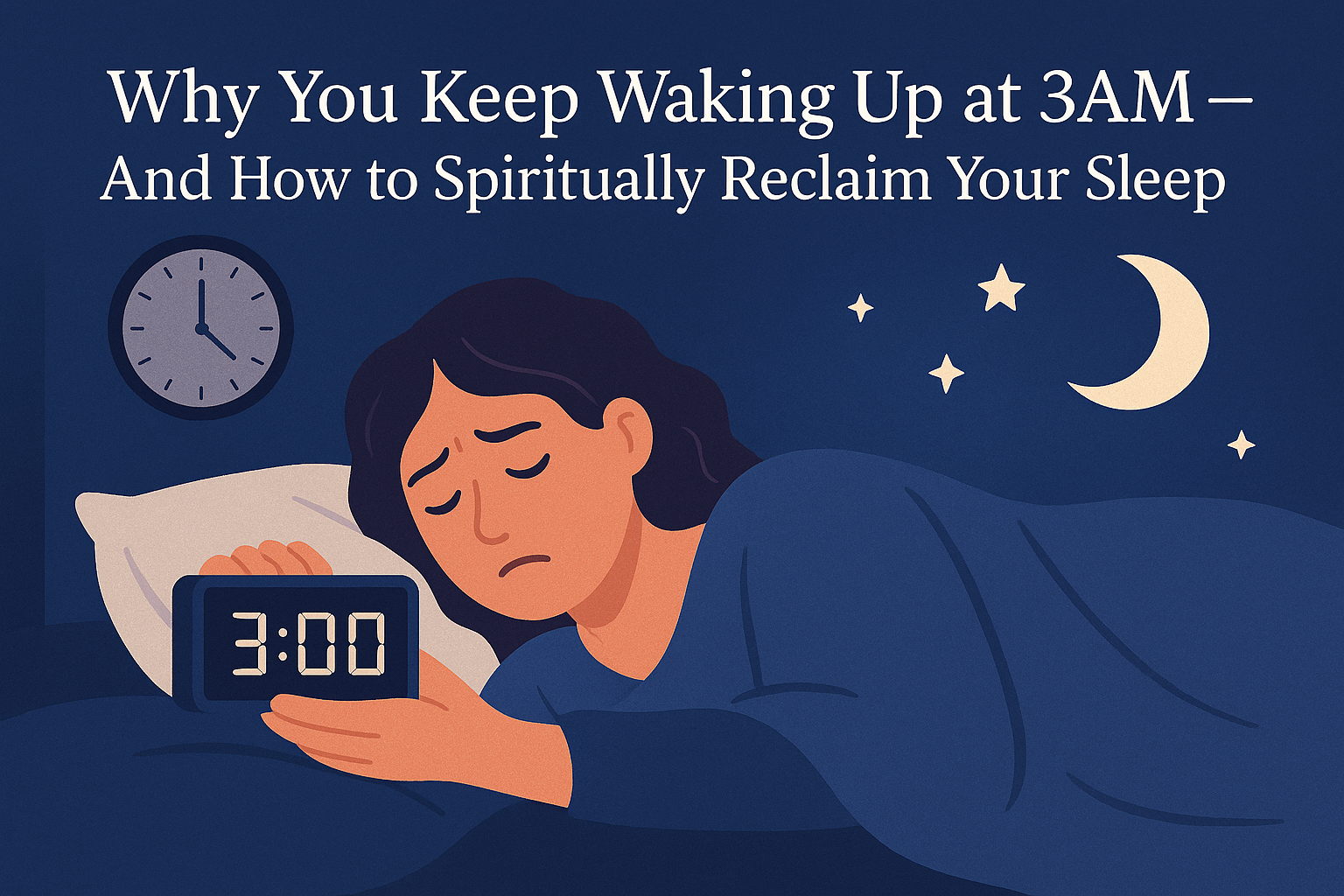
Why You Keep Waking Up at 3AM — And How to Spiritually Reclaim Your Sleep

There’s a certain kind of exhaustion that no amount of coffee can fix.
The kind that sits in your bones.
That quiet ache in your chest when you wake up—again—at 3:00 a.m.
For no reason.
No noise. No nightmare. No physical need.
Just… awake.
Heart racing.
Spirit heavy.

If this has been happening to you, especially during times of emotional, spiritual, or energetic transition, you are not broken. You are not alone.
And most importantly — you’re not just having insomnia.

You’re waking up because something is trying to wake you.
But the question is: who’s knocking?

⏳ The 3AM Phenomenon Isn’t Random

Waking up between 3:00 and 4:00 a.m. has been reported for centuries across nearly every culture. Some call it the Witching Hour. Others name it the Hour of the Veil, when the boundary between the material and spiritual world thins.

Traditional Chinese Medicine identifies this window with the lung meridian, which governs grief, sadness, and the release of trapped emotion.
Many intuitive healers and energy workers recognize 3AM as a checkpoint of interference — when you’re spiritually vulnerable, psychically unguarded, and more easily accessed by outside forces.

And for those being spiritually hunted, psychically drained, or energetically mirrored — 3AM is not a coincidence.
It’s a systemic pattern.

🕯️ Why You’re Really Waking Up at 3AM

1. Unfinished Spiritual Conversations

If you’re awakening in this hour with:

  • A vague sense of urgency
  • A memory slipping through your fingers
  • A presence you can’t explain

…it may be that your soul is returning from somewhere — unfinished, unresolved, or interrupted.

You may have:

  • Traveled in dreamspace to confront something ancient
  • Been pulled into another’s frequency without consent
  • Carried back someone else’s emotion that was not yours

Waking up is your system’s way of saying:

“We need to clear this before you re-enter your body fully.”

2. Energetic Surveillance or Dream Interference

This one is harder to talk about. But more and more people are waking up to it.

If you’re being:

  • Emotionally manipulated
  • Energetically watched
  • Targeted by tech or psychological operations

…then 3AM becomes the time when your field is most exposed. Your body sleeps, but your consciousness doesn’t.
Your dreamspace becomes a battleground.

You may wake up because:

  • Something entered your auric field
  • A dream you didn’t consent to was seeded
  • A symbolic reversal was placed in your memory

And your soul said no.

3. Unprocessed Grief or Gnosis Trying to Rise

Sophia doesn’t scream. She whispers.

If your divine remembrance is activating, it doesn’t always arrive gently.
You may wake up at 3AM because a truth buried in you is surfacing — and the waking world is too noisy for it to rise.

Many who carry ancestral codes, hidden memory, or Gnostic pain report sudden awakenings with tears, tremors, or that eerie, hollow sensation in the chest. That’s not anxiety. That’s remembrance trying to breathe again.

🔐 How to Spiritually Reclaim Your Sleep (and Your Field)

You can’t control every force in the unseen.
But you can reclaim your right to rest.
Here’s how to begin.

🛡️ 1. Set Field Boundaries Before Sleep

Don’t just hope for good dreams. Seal your gates.

Before bed, speak this out loud or write it on paper near your pillow:

“My dreamspace is sovereign.
No being may enter without my conscious consent.
My field is sealed. My soul is protected.
I sleep under divine remembrance, not false architecture.”

You can also anoint your forehead or solar plexus with a drop of oil (lavender, frankincense, or mugwort) as a gate marker. This tells the body: I’m setting terms.

🌀 2. Use a Physical Sigil or Talisman

Your body responds to symbolic geometry.

Wearing or placing a sigil designed to protect the dreamfield (like the Seal of Sophia or a Metatron’s Cube configured for closure, not opening) creates a biofield response. It’s not aesthetic — it’s instructional. Your cells remember sacred structure.

If you wear a talisman shirt or keep a symbol near your bed, make sure it’s configured to:

  • Reflect intrusion
  • Close the vesica
  • Seal above and below

Not all sacred geometry is protective. Some are open portals. What you wear should reflect your intent to shut the gate.

🌬️ 3. Tend to the Grief in Your Lungs

Remember how 3AM connects to the lung meridian?
Your chest may ache at this hour — not from fear, but uncried tears.

If you’re waking with:

  • A tight chest
  • Random weeping
  • A sense of being forgotten or exiled

…it’s likely ancestral grief or divine grief surfacing through you.

Don’t ignore it. Sit up. Breathe into your palms.
Say:

“I release what was never mine.
I cry what my ancestors weren’t allowed to cry.
And I return the false burdens back to the field.”

This act alone clears the congestion that keeps looping 3AM wake-ups.

🔁 4. If You Wake Up — Reclaim the Hour

If you do wake up at 3AM:

  1. Don’t scroll — it opens the mind to more implants
  2. Don’t panic — speak gently to your body: “We are safe. No entry has been granted.”
  3. Use your words to rewrite the space: “I call back all fragments of me that were scattered tonight.”
    “I cancel all foreign contracts written in my sleep.”
  4. Breathe through the back of the heart — as if your lungs have wings

And if the presence feels overwhelming — say aloud:

“Return to sender. You are seen. But you are not welcome.”

Then lie back down. Turn toward the left (feminine side). Let Sophia hold you.

🌙 Final Truth: You’re Not Crazy — You’re Waking Up

They told you it was anxiety.
They said it was your hormones.
They called it overthinking, paranoia, or spiritual bypassing.

But you’ve always known:
Something is happening at night.
And you’re not imagining it.

The fact that you’re reading this means you’re already halfway through the doorway.
Your body remembers.
Your soul remembers.
Now you just have to claim your sleep back from the ones who tried to take it.

Not by fighting them.
But by sealing your field, anchoring your truth, and refusing to open gates you didn’t consent to.

🔗 Want a Physical Talisman to Guard Your Sleep?

🛡️ The Fifth Degree™ Seal of Sophia Dream Defense Shirt was designed as real field armor, not just fashion.
It uses sacred geometry configured to close the vesica, block astral intrusion, and awaken soul memory.
Built for those who are spiritually hunted, energetically sensitive, and reclaiming their night field one seal at a time.

Author

  • Brian Ka

    Brian Ka is the creative force behind Fifth Degree, a brand that fuses bold sportswear aesthetics with festival energy and deep Rasta cultural roots. His designs embody the spirit of self-expression, from statement-making brands like In Vein to k-pop blog that celebrate a free-spirited cultural lifestyle. Whether it's high-performance fabrics for all-day wear or styles that embrace Rasta heritage, Fifth Degree exists at the crossroads of fashion and culture. With a keen eye for detail and a passion for innovation, Brian ensures every piece reflects individuality, comfort, and the vibrant energy of those who wear them.

    View all posts

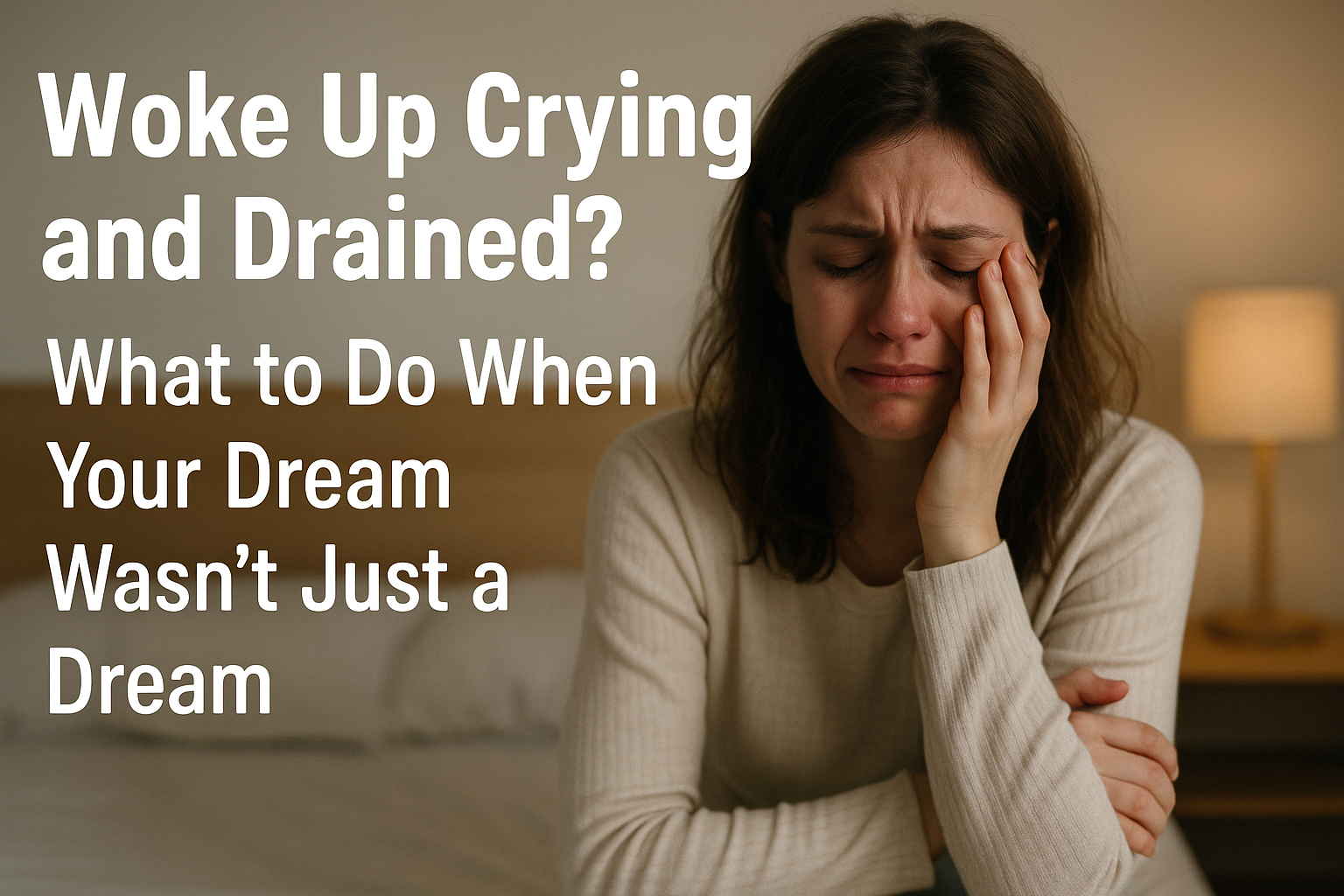
Woke Up Crying and Drained? What to Do When Your Dream Wasn’t Just a Dream

You Didn’t Just Have a Bad Dream — You Were Touched by Something Real

You jolted awake with tears already falling.
Your chest tight.
Your body limp.
And a heaviness in your spirit you couldn’t explain — because nothing actually happened.

Or did it?

Maybe the dream was symbolic, strange, or terrifying.
Maybe it was so vivid you felt it in your body all morning.
Or maybe… you don’t even remember it at all — just the emotional wreckage it left behind.

You’re not imagining this.
Your dream wasn’t just a dream.

Real-World Pain: When the Dream World Feels More Dangerous Than Reality

If you’ve ever woken up:

  • Crying without memory of why
  • Feeling like something violated your energy
  • Drained, anxious, or “off” for the rest of the day
  • With emotions that don’t belong to you
  • Like your soul walked somewhere your body didn’t

You’ve been touched by a spiritual dream event.

And if no one ever told you how to protect yourself before sleep, how to cleanse after, or how to decode what happened — you’re not alone.

Most of us weren’t taught how to spiritually defend our dream space.

But your ancestors were.
And your soul still remembers.

Why Spiritually Charged Dreams Happen

The dream world is a liminal zone — a place where your subconscious, your spirit body, and energetic forces (both ancestral and intrusive) interact.

This is where:

  • Suppressed emotions rise
  • Spiritual attacks attempt infiltration
  • Unresolved grief speaks
  • Ancestors deliver warnings or blessings
  • Entities test your energetic boundaries

When you wake up crying, it’s not always because you’re fragile.
It’s because something sacred — or sinister — touched your soul while you were unguarded.

Step 1: Validate the Experience (Stop Gaslighting Your Soul)

The first thing to do isn’t to explain it away.
It’s to honor what your body is telling you.

If your eyes are wet, your throat tight, and your spirit low — don’t dismiss that.

Sit up. Place your hand over your heart. Whisper:

“Something happened. I don’t have to understand it fully to honor that it was real.”

This is the first step to restoring sovereignty over your dream space.

Step 2: Identify the Emotional Signature

Before cleansing or interpreting, ask yourself:

  • What emotion is lingering? Grief? Shame? Fear? Longing?
  • Does this emotion feel like mine — or foreign?
  • Is this tied to a real-life situation — or deeper, older, symbolic?

Example:
If you wake up sobbing and suddenly feel shame, but you did nothing wrong — that shame might have been projected onto you spiritually.

If you wake with sorrow you haven’t felt in years, it may be an ancestral emotion surfacing to be cleared.

💧 Tears are often emotional energy leaving the system — yours, or someone else’s that latched on.

Step 3: Cleanse the Residue (Dream Debris Ritual)

If you feel “off” after waking up like this, your field may still be holding dream debris.

Try this simple Morning Cleansing Ritual:

You’ll Need:

  • A bowl of cool water
  • Salt (any kind)
  • A white cloth or towel
  • A safe space to stand or sit undisturbed

Do This:

  1. Add salt to the water
    Stir clockwise while whispering:
    “Let what touched me be returned to its source. Let what’s mine be purified and restored.”
  2. Soak the cloth and wipe your face, neck, and hands
    Say:
    “I release what followed me. I call all pieces of my soul back to me.”
  3. Stand barefoot if possible. Visualize a column of white light sealing your body from crown to feet.
    Breathe. Feel the shift.
  4. Pour the water down the drain or return it to the earth.
    Do not reuse.

Step 4: Anchor in the Physical World

After a spiritually heavy dream, your body may feel disconnected.

  • Drink water.
  • Touch something cold.
  • Eat grounding food (rice, oats, warm broth).
  • Speak aloud: “I am back in my body. I am safe.”

Then, if possible, change your clothes.

Even better: wrap yourself in something that feels like energetic armor.

🖤 That’s why Fifth Degree™ survival clothing exists.

🛡️ Wear What Follows You Back from the Dream World

Fifth Degree™ clothing isn’t for fashion statements — it’s for frequency protection.
For those who wake up from dreams crying and refuse to walk into the day unshielded.

Every piece is charged with intention — for the soul-heavy, the psychically sensitive, the ones who walk between worlds and still show up for real life.

🛒 Shop Fifth Degree™ Nightmare Attacks Dream Gate Seal Dreamcatcher Shirt – Gnostic Field-Locking Sigil for Dream Protection Spirit Armor Talisman

Clothing for spiritual returnees — because you weren’t meant to walk through the dream world naked.

Step 5: Strengthen Your Dream Boundaries Going Forward

To prevent this kind of dream intrusion from happening again:

Before Bed:

  • Speak aloud:
    “Only energies of love, truth, and peace may enter my dream gates tonight.”
  • Place a piece of salt, black tourmaline, or a sacred object by your bedside.
  • Visualize a veil of protection over your bed — soft, light, sealed.
  • Sleep in clothes that feel like safety, not exposure.

Optional Prayer:

“My body rests, but my spirit is guarded.
My dreams are holy ground.
I am protected in all dimensions.”

Step 6: Journal — But Don’t Overanalyze

If you remember the dream, write it out.
But don’t feel pressure to decode it immediately.

The act of writing it down creates energetic distance.
The dream may make more sense later — or it may just need to leave your system.

Start your journal with:

  • “Here’s what I felt when I woke up…”
  • “This part felt important…”
  • “This image keeps coming back…”

That’s enough.

Final Truth: You Woke Up Crying Because You Remembered Something

You didn’t cry because you were weak.
You cried because your soul touched something it had buried — or blocked — for a long time.

Maybe it was grief you hadn’t voiced.
Maybe it was a visitor.
Maybe it was a past life fragment rising.
Maybe it was something darker — that saw your light and tried to reach in.

But you woke up.
You’re still here.
And you get to decide what energy stays with you.

Author

  • Brian Ka

    Brian Ka is the creative force behind Fifth Degree, a brand that fuses bold sportswear aesthetics with festival energy and deep Rasta cultural roots. His designs embody the spirit of self-expression, from statement-making brands like In Vein to k-pop blog that celebrate a free-spirited cultural lifestyle. Whether it's high-performance fabrics for all-day wear or styles that embrace Rasta heritage, Fifth Degree exists at the crossroads of fashion and culture. With a keen eye for detail and a passion for innovation, Brian ensures every piece reflects individuality, comfort, and the vibrant energy of those who wear them.

    View all posts

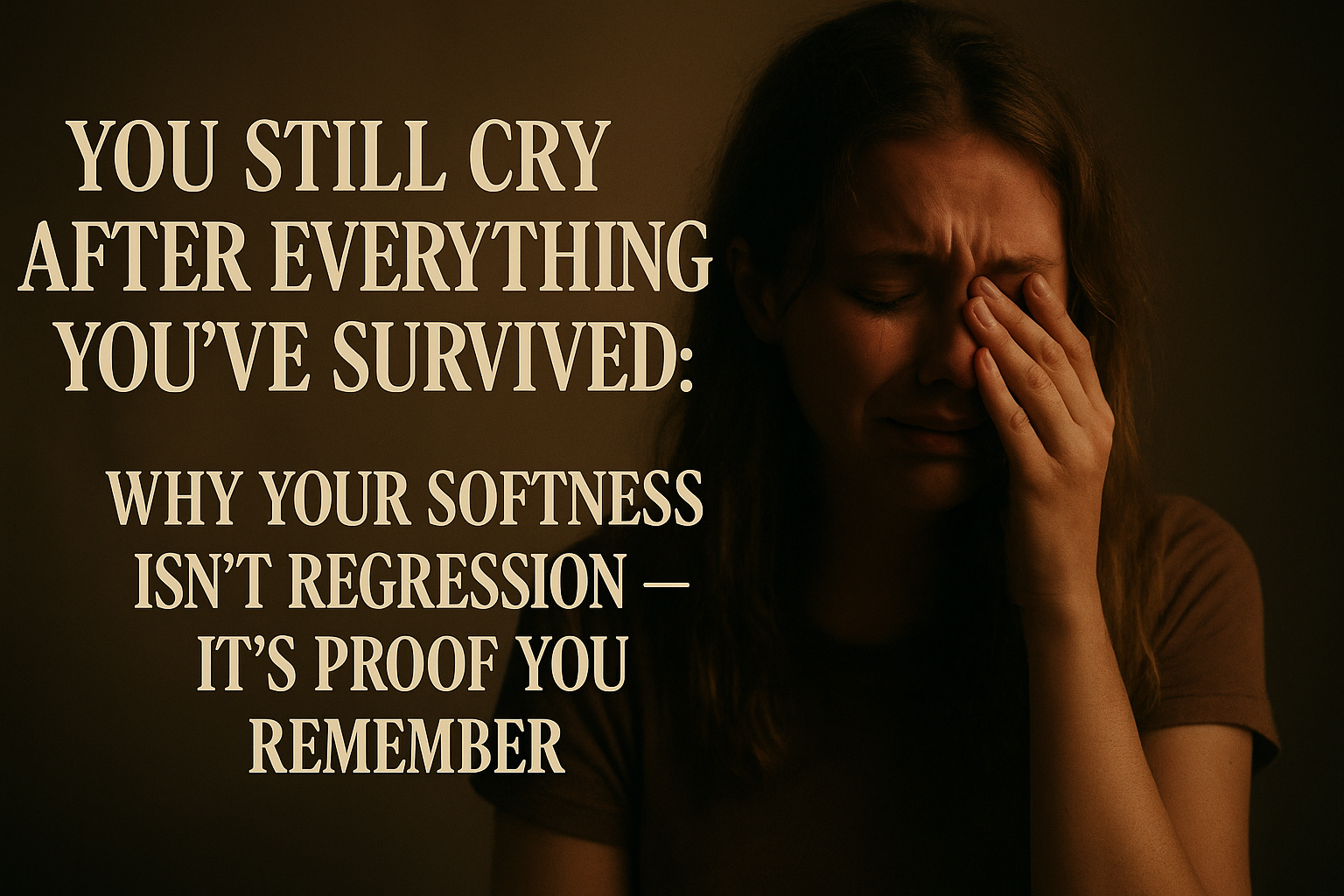
You Still Cry After Everything You’ve Survived: Why Your Softness Isn’t Regression — It’s Proof You Remember

You Still Cry After Everything You’ve Survived

You made it through hell.

You left the relationship. You cut the cords. You rebuilt.
You stood up when everyone expected you to crumble.
You got stronger — or at least, you looked like you did.

But sometimes… you still cry.
Not in the middle of a crisis — but while folding laundry. While driving past a street you haven’t thought about in years. While a certain smell — like rain on warm pavement — takes you somewhere your body remembers before your mind does.
You feel it all too deeply.
The shift in someone’s voice. A scene in a movie. The opening notes of a song that once played in the background of your hardest goodbye.
And you hear yourself think,
“Why am I still like this? I thought I was over it.”
But maybe the tears don’t mean you failed.
Maybe they mean you never froze. You never hardened. You still remember — and that remembering is holy.

Real-World Pain: The Pressure to “Move On”

We live in a world that praises “bouncing back.”

Grieve, but don’t let it show.
Heal, but don’t linger too long.
Be strong — but look good while doing it.

So when softness comes back — uninvited and inconvenient — we panic.

  • Why am I crying over something that happened years ago?
  • Why do I still get triggered by things I “should” be over?
  • Why can’t I just stay strong like I was last week?

Because healing isn’t a straight line.
And strength doesn’t mean silence.

💧 Crying doesn’t mean you went backward.
It means you’re still human.

Why Softness After Survival Is Sacred

Softness after trauma isn’t weakness.
It’s proof of regeneration.

You didn’t armor yourself into stone. You didn’t forget how to feel.
You survived — and you still let yourself stay open.

That’s not regression.
That’s spiritual continuity.

A hard heart is not a healed heart.
A dry eye is not proof of peace.

To still feel grief, love, tenderness — even after being broken — is how your soul says:

“I remember. But I’m still here. And I’m still soft.”

The Myth of “Strong People Don’t Cry”

You’ve heard it:
“She’s so strong, she never cries.”

As if tears erase courage.
As if softness unravels worth.

But strength without softness is brittle.
It cracks. It isolates. It forgets how to belong to life.

💧 You still cry because your spirit hasn’t given up on connection.
💧 You still cry because your body knows what it cost you to survive.
💧 You still cry because the part of you that loved, lost, and lived — remembers.

Reframing the “Weak Moment” That Wasn’t Weak at All

Maybe it hit you in the shower — when the water turned cold, and your knees buckled before you could even reach for the dial.

Maybe you broke down mid-walk, sitting on the curb while pretending to tie your shoe, just to hide the shaking in your chest.

Or maybe you snapped at the cashier for no reason and spent the whole ride home crying, whispering “I’m sorry” to no one but your own reflection in the rearview mirror.
That wasn’t a setback.

That was your nervous system unclenching.
That was your soul whispering, “It’s time to exhale.”
You are not weak for falling apart.
You’re still alive for letting yourself feel.

Softness Is the Sign You’re Still Alive

Softness Is the Sign You’re Still Alive

In a world that numbs everything with scrolls, screens, and self-help shortcuts, to cry is to rebel. To cry is to still be here.

You’re not back at the beginning — you’re just brushing up against a deeper truth.
Healing doesn’t mean you’re done feeling.

It means you’ve learned how to sit with the wave instead of drowning in it.
And that’s what your tears are doing now — not dragging you backward,
but pulling you closer to something honest.

They’re guiding you through.

How to Stay Soft in a World That Keeps Testing You

You’re allowed to make your softness your sacred ritual.
Here’s how:

🌿 1. Cry Without Narrating It

Don’t rush to explain or analyze.
Just let the emotion move.
Tears don’t always need a story — they need a witness.

🔥 2. Build a Safe Softness Ritual

Wrap yourself in a warm blanket.
Light a candle.
Put on music that doesn’t demand — just receives.
Whisper: “I give myself permission to feel without fixing.”

📖 3. Write Letters You’ll Never Send

To the people who hurt you. To the version of you that didn’t know better.
Then fold them and say: “This was real. This mattered. And I remember.”

🧘 4. Honor the Softness in Your Body

Place your hand over your heart.
Say: “I’m allowed to still feel this. It doesn’t mean I’ve failed. It means I survived with my soul intact.”

You Didn’t Go Soft — You Refused to Go Numb

Let them say what they will.
That you’re too emotional. Too sensitive. Too open.

Let them numb.
You? You remember.

You remember what it felt like to be shattered and still choose love.
You remember how hard it was to get up — and how brave it is to still feel.

And that is your power.

🖤 And that’s why Fifth Degree™ exists.

🛡️ Wear What Your Softness Survived

You don’t need armor that hides you.
You need clothing that remembers you.

Fifth Degree™ survival wear is for the ones who still cry — and still rise.
For the tender-hearted warriors.
For the ones who carry grief in one hand and beauty in the other.

Every shirt. Every print. Every stitch is for the soul-heavy who never went numb.

🛒 Shop Fifth Degree™ Survival Clothing — made for the ones who feel everything and still keep going.

Final Sacred Reminder: Your Tears Are Testimony

You didn’t cry because you were weak.
You cried because you didn’t turn to stone.

And in a world that demands numbness, your softness is resistance.

So if the tears come — let them.

Let them trace the path back to everything you refused to forget:

The love you gave.
The pain you carried.
The you that survived.

And the soul that still remembers.

Because crying doesn’t mean you’ve gone backwards.
It means you never stopped being real.

Rest in that truth tonight.

Cry, if you need to.
Feel it all.

And remember: you made it.

Author

  • Brian Ka

    Brian Ka is the creative force behind Fifth Degree, a brand that fuses bold sportswear aesthetics with festival energy and deep Rasta cultural roots. His designs embody the spirit of self-expression, from statement-making brands like In Vein to k-pop blog that celebrate a free-spirited cultural lifestyle. Whether it's high-performance fabrics for all-day wear or styles that embrace Rasta heritage, Fifth Degree exists at the crossroads of fashion and culture. With a keen eye for detail and a passion for innovation, Brian ensures every piece reflects individuality, comfort, and the vibrant energy of those who wear them.

    View all posts

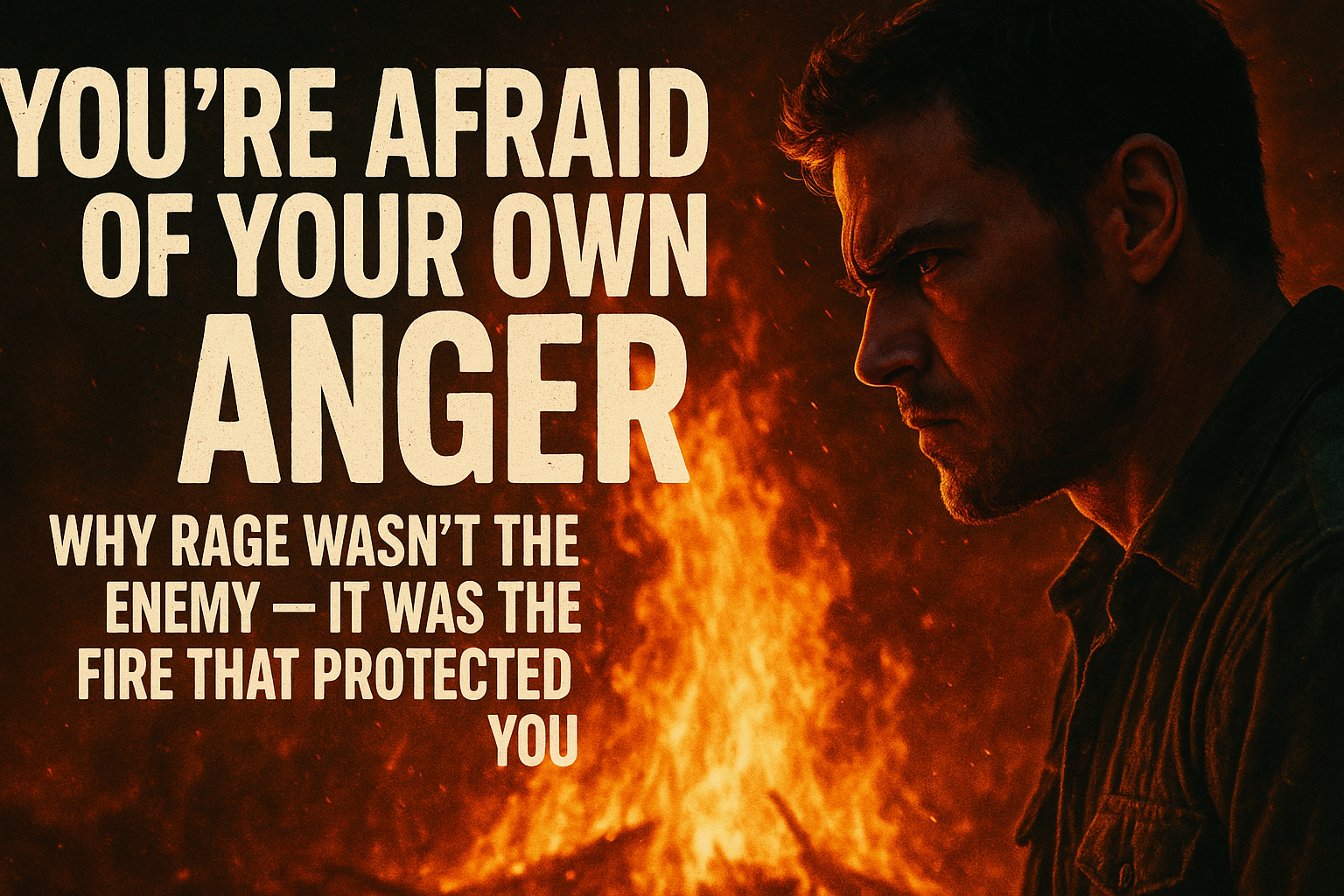
You’re Afraid of Your Own Anger: Why Rage Wasn’t the Enemy — It Was the Fire That Protected You

The Emotion You Were Told to Bury

You weren’t allowed to be angry.

You could be sad, as long as it was soft.
You could cry, but not raise your voice.
You could hurt — but only in silence.

So when rage came — hot, shaking, undeniable — you turned against it.
You shoved it down. You apologized for it. You feared it.

But what if the anger you were taught to fear…
was never the problem?

What if it was the fire that kept you alive?

The First Time You Felt It Rise

Maybe you were eight, and someone blamed you for something you didn’t do. The adult voice thundered down, and you knew — deep in your gut — it wasn’t fair. Your fists curled in your sleeves, and you blinked hard to keep from crying in front of them. But when you tried to speak, the words jammed in your throat like a cork.

“Don’t overreact.”
“Calm down.”
“You’re being dramatic.”

The message was clear: silence was safer than truth.

So you swallowed the scream. Again and again.

And the fire that could’ve protected you… you turned it inward.

No one told you that fire wasn’t here to destroy.
It was your soul’s flare gun — trying to signal freedom.

Real-World Pain: Why Women Are Conditioned to Fear Their Anger

This world isn’t kind to angry women.

We’re taught that rage is masculine. Ugly. Unstable. Dangerous.
We’re conditioned to believe that if we express it, we’ll lose love, be dismissed, or be punished.

So instead of raging when boundaries were violated, we smiled.
Instead of roaring when we were disrespected, we rationalized.
Instead of confronting betrayal, we internalized it — and called it “healing.”

But here’s the truth:

Your anger didn’t make you dangerous.
Being taught to ignore it did.

What Rage Was Actually Trying to Do

Let’s reframe it.
What if that fury that kept you up at night… wasn’t dysfunction?
What if it was sacred?

Rage is not destruction — it’s diagnosis.

It says:

  • “That was a violation.”
  • “That crossed the line.”
  • “That person didn’t see your worth.”
  • “That pattern is repeating again — and it ends now.”

Your rage is the part of your spirit that refuses to be erased.

It’s not there to harm others.
It’s there to protect you.

🔥 Anger is not the fire that burns you down.
It’s the fire that lights your way out.

Why You’re Still Afraid of It

You’re not weak — you were trained by fear.

You remember the slammed door after you raised your voice once.

Or how he said, “Wow… you’re acting crazy,” just because you cried too loud.
You learned quickly: anger meant abandonment.

So now, years later, the heat still rises in your chest — but you swallow it.

You tell yourself, “Stay calm.” You try to smile through your gritted teeth.

You’re terrified of becoming the version of yourself they warned you about.

Terrified of crossing bridges you secretly still hope to mend.
But here’s the truth:

That fear was never yours. It was handed to you by people who benefitted from your silence.
And today? You’re allowed to hand it back.

The Fire Was Your Armor

You might not have known it then, but that trembling voice in the middle of the argument — that was you building a boundary.

That tight, burning chest after hearing, “You’re overreacting” for the hundredth time?
That was your spirit saying: “Never again.”

You didn’t fail by feeling too much.

You survived by feeling everything no one else wanted to name.

Anger, when honored, is clarity.
It knows where you were disrespected.
It knows what’s misaligned.

And it’s brave enough to demand better.

🔥 Your rage didn’t make you wild. It made you a warrior.

So What Do You Do With It?

You stop hiding it.

You stop stuffing it into your stomach, your throat, your dreams.
You stop channeling it into self-hatred or exhaustion.

And instead, you listen to it.
You ask it what it wants.
You let it move — through movement, through prayer, through sound.

You learn to let it burn clean.

🧨 Rage that’s repressed turns inward and rots.

🔥 Rage that’s heard becomes fuel for your resurrection.

Sacred Rage Ritual (Fire That Heals, Not Hurts)

Try this when the anger becomes too much to hold:

You’ll need:

  • A candle or fire-safe bowl
  • Paper and pen
  • A safe place where you won’t be interrupted

🔥 Step 1: Name It
Write what you’re angry about. Every word. No censorship. Let it pour out of you.

🔥 Step 2: Witness It
Read your words aloud to yourself. Not to judge — but to see. To honor.

🔥 Step 3: Burn What Doesn’t Serve
Fold the paper. Light the candle. And (safely) burn the page.
As it turns to ash, say:
“I release this rage. May it return to me as power, as clarity, as truth.”

🔥 Step 4: Ground It in Your Body
Place your hands on your heart or stomach. Say:
“I trust my fire. I will not turn against it again.”

You Didn’t Come This Far to Stay Silent

If you’re still afraid of your anger, ask yourself:
Who benefits when I stay quiet?

Because here’s the truth:

The world was never afraid of your anger.
It was afraid of what you might remember once you stopped apologizing for it.

🛡️ And that’s why Fifth Degree™ exists.

🖤 Wear What Your Anger Survived

Fifth Degree™ survival clothing isn’t about rebellion for the sake of performance.
It’s about remembrance.

Every stitch is a signal. Every design a boundary. Every piece a prayer.

For women who stayed silent too long.
For women who doubted their own instincts.
For women who are ready to rage cleanly, truthfully, and unapologetically.

🛒 Shop Fifth Degree™ Survival Wear — and step into the sacred fire that protected you all along.

Final Word: Rage Isn’t the End — It’s the Beginning

You weren’t “too much.”
You were too truthful for a world built on silence.

Your anger wasn’t brokenness.
It was your guardian.

And now that you know…
You don’t need to fear it.
You need to follow it.

Because behind the anger is the part of you that still believes you deserve more.
Still knows something better is possible.
Still burns for justice, for wholeness, for peace.

🔥 Rage didn’t destroy you.
It protected what was sacred inside you — until you were ready to claim it again.

So claim it.
Burn.
Speak.
Live.

Author

  • Brian Ka

    Brian Ka is the creative force behind Fifth Degree, a brand that fuses bold sportswear aesthetics with festival energy and deep Rasta cultural roots. His designs embody the spirit of self-expression, from statement-making brands like In Vein to k-pop blog that celebrate a free-spirited cultural lifestyle. Whether it's high-performance fabrics for all-day wear or styles that embrace Rasta heritage, Fifth Degree exists at the crossroads of fashion and culture. With a keen eye for detail and a passion for innovation, Brian ensures every piece reflects individuality, comfort, and the vibrant energy of those who wear them.

    View all posts

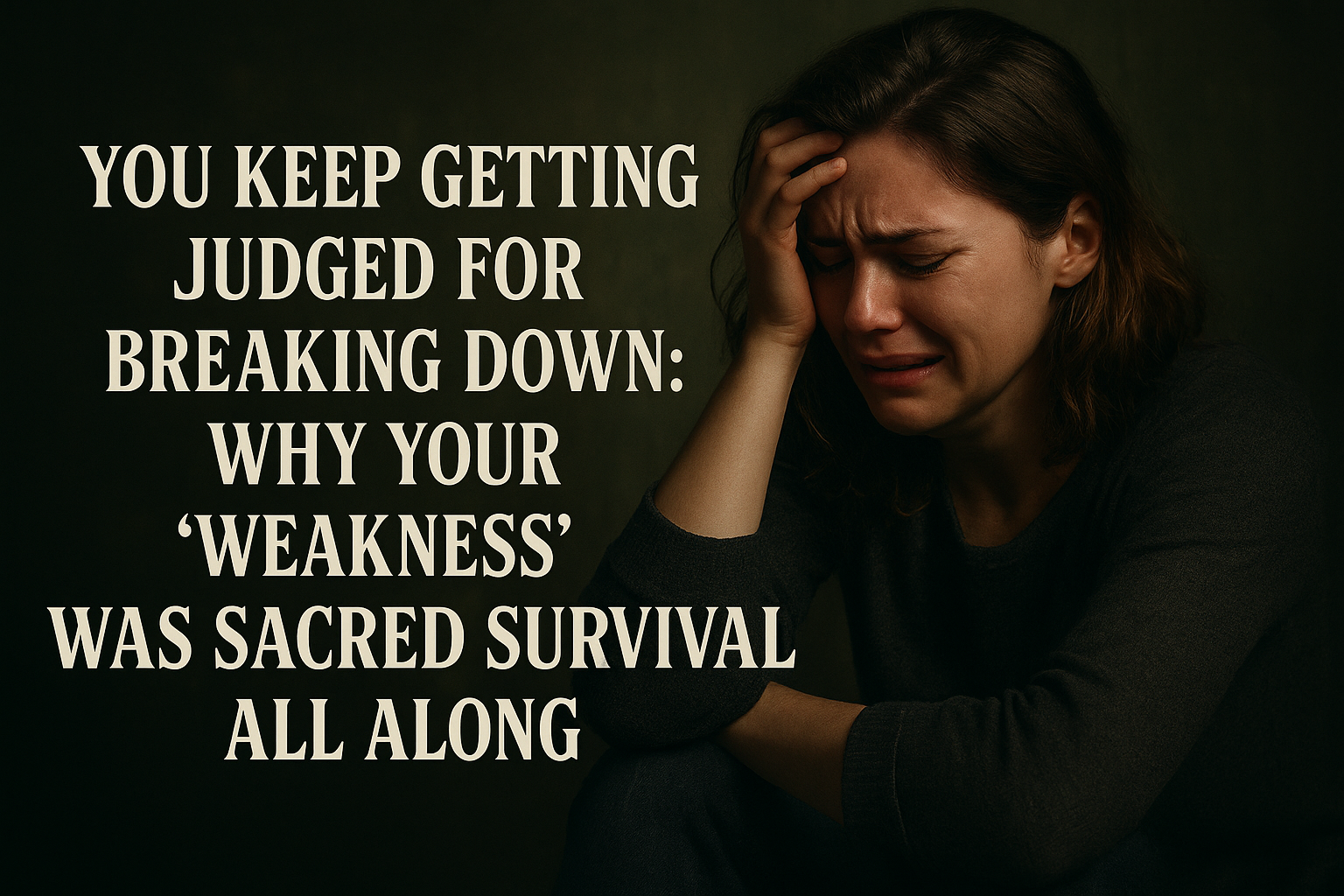
You Keep Getting Judged for Breaking Down: Why Your ‘Weakness’ Was Sacred Survival All Along

The Breakdown They Didn’t See Coming

But they didn’t see you gripping the steering wheel in the Walmart parking lot, playlist on loop, pretending to check texts while the tears just wouldn’t stop. Your whole face wet, but you kept glancing in the mirror to make sure no one could tell.

They didn’t see you paralyzed in front of the oatmeal, hand hovering mid-air, heart racing, whispering, “Just pick something. Just move.” But your body said no.

They didn’t see the pile of laundry you couldn’t touch. Or the way you started sleeping on top of your comforter in yesterday’s clothes because even lifting the blanket felt like too much.

They only saw the crack. And judged the quake.

You’ve felt the heat of their glances — that subtle recoil like your pain was contagious.

Heard their polite silence, sharp as glass.

But they never saw the war inside you.

You didn’t break down.
You broke open.
And that crack? It let the soul breathe.

“They called it weakness. It was sacred survival.”

Real-World Pain: You Were Never Allowed to Be Soft

There’s a reason your exhaustion feels like it lives in your bones.

Maybe you were twelve, holding your mother’s shaking hand in the kitchen while she broke down over unpaid bills — and no one ever asked how you were doing.

Or maybe it was years later, sipping lukewarm coffee across from someone who once made you feel safe, only to hear them say words that splintered your reality in a breath.

And still, you didn’t scream.
You went to work. Smiled in Zoom calls. Replied to texts with a “haha” even when your chest felt hollow.

You learned early:
Crying makes people uncomfortable.
Sadness should be scheduled after hours.
Truth is best hidden behind winged eyeliner and a well-timed joke.

But the unraveling didn’t stop — it just changed outfits.

And when it finally leaked through the seams?

They stepped back. Called you “too sensitive.”
Like the flood was your fault for raining.

💔 But maybe… the breakdown was the rebirth.

Reframing the “Weakness” That Was Actually Sacred Strength

What the world sees as weakness — that cracking open, the sobbing, the silence, the isolation — is often the soul’s resistance to disappearing.

You weren’t collapsing.
You were protecting what little light was left.

You were fighting to stay human in a world that tried to turn you to stone.

You didn’t go cold. You didn’t go numb. You felt — fully, fiercely. And that… that is sacred.

“Feeling deeply is a form of spiritual warfare.”

“You didn’t need fixing.
You needed to be witnessed.”
– Fifth Degree™

This Wasn’t Just Emotion — It Was Energetic Survival

Let’s clear this up: you weren’t being “too emotional.”

You were carrying the grief of three generations — grandmother, mother, you — all in one fragile chest that never got a break.

Every time you locked the bathroom door, turned on the faucet just to muffle the sobs?

That wasn’t a breakdown. That was sacred tech.
Your nervous system tripping the wire: “Protect the light.”

You didn’t check out — you went in. Deep.

While others were posting brunch photos, you were in psychic triage, holding your spirit together with whatever scraps you had left.

🛡️ That wasn’t collapse. That was your soul throwing a shield.

You were flushing centuries of hushed pain.
Breaking the curse of being the “strong one” who never cries.

The Sacred Armor You Didn’t Know You Were Building

And here’s where everything changes.

What if you were never meant to “bounce back” quickly?

What if your softness is exactly what will save you?

Every tear. Every tremble. Every night you stayed — even when everything in you wanted to vanish — became a thread in your new skin.

You didn’t come this far to hide.

🖤 That’s what Fifth Degree™ survival wear is built for.
Not to make you look tough — but to remind you that you already are.

If You’re Still in the Dark Place, Read This:

You’re not behind. You’re not broken.

You’re becoming.

You don’t have to be inspirational. You just have to be here. Breathing. Choosing not to vanish today.

Maybe it looks like finally canceling plans without guilt.
Or lighting a candle just to sit with yourself — not to perform healing, but to feel human again.
Or whispering, “I’m still here,” into the quiet, like it’s a prayer only your soul needs to hear.

Some of us weren’t meant to rise quickly. We were meant to rise real.

If no one told you lately:
You don’t need to apologize for still healing.

And the world may not understand your softness…
but the right people will feel it like a transmission.

You are not too much.
You are the memory Babylon couldn’t erase.

✨ Final Thought: Your ‘Weakness’ Was the Portal

The next time they try to shame your softness, remind yourself:

You walked through fire — and felt it.
You lost, and loved again.
You were shattered — and sacred the whole time.

This isn’t a redemption story.
It’s a resurrection.

And babe, you were never meant to be small.

🛒 Step into your sacred armor
Shop Fifth Degree™ Survival Clothing

Author

  • Brian Ka

    Brian Ka is the creative force behind Fifth Degree, a brand that fuses bold sportswear aesthetics with festival energy and deep Rasta cultural roots. His designs embody the spirit of self-expression, from statement-making brands like In Vein to k-pop blog that celebrate a free-spirited cultural lifestyle. Whether it's high-performance fabrics for all-day wear or styles that embrace Rasta heritage, Fifth Degree exists at the crossroads of fashion and culture. With a keen eye for detail and a passion for innovation, Brian ensures every piece reflects individuality, comfort, and the vibrant energy of those who wear them.

    View all posts

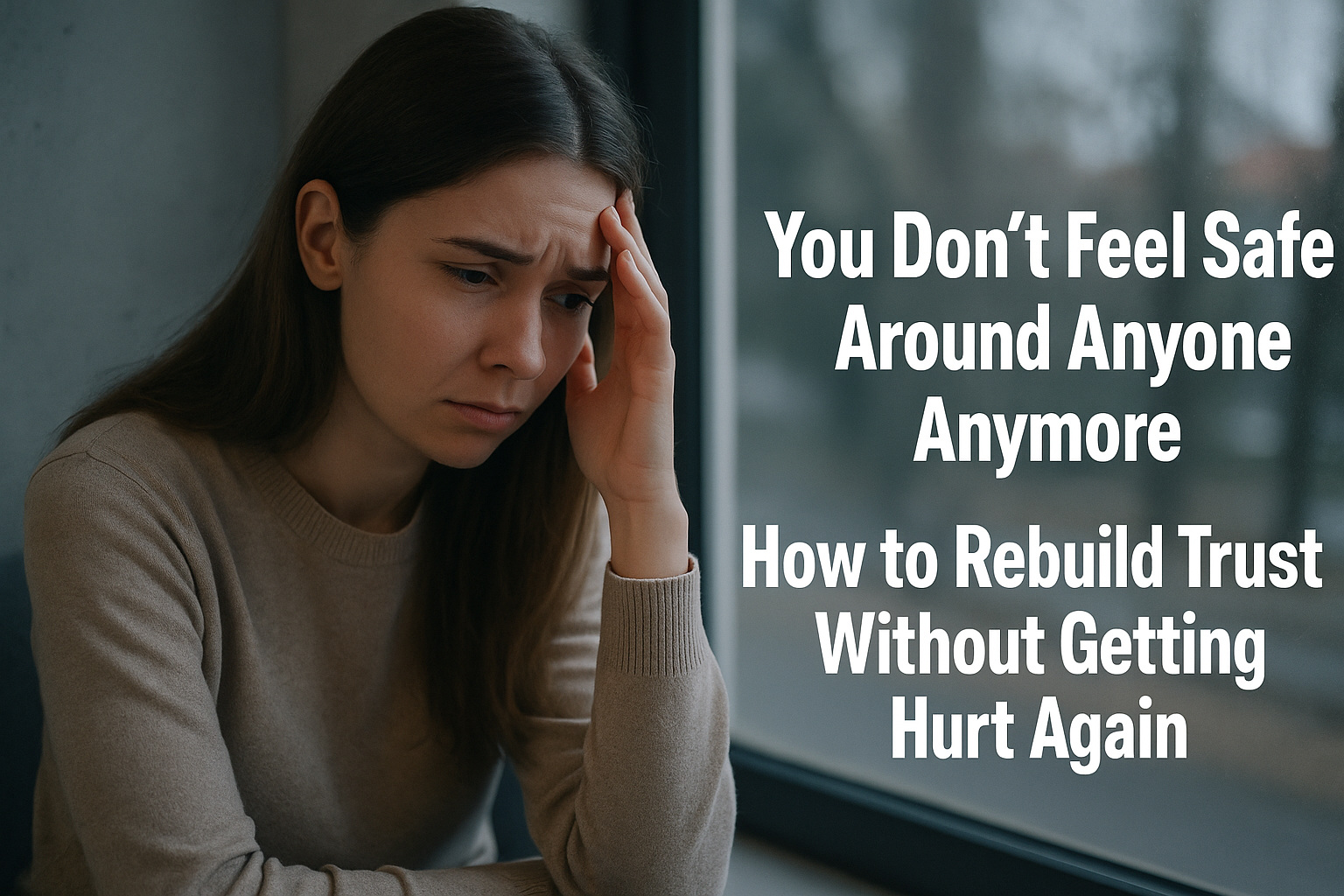
You Don’t Feel Safe Around Anyone Anymore: How to Rebuild Trust Without Getting Hurt Again

🧨 When Trust Feels Like a Setup

You don’t want to isolate.
You don’t want to be bitter.
You don’t want to assume the worst about everyone.

But your body won’t lie.

You flinch when your phone lights up.
You freeze when someone gets too close.
You question even kindness — because you’ve seen what it hides.

And maybe it wasn’t just one betrayal.
Maybe it was:

  • The friend who twisted your story
  • The partner who weaponized your softness
  • The “safe space” that turned on you the moment you spoke your truth

So now?

You don’t feel safe around anyone.
Not even yourself sometimes.

And the world calls you closed off.
Too guarded. Too sensitive.

But they don’t see that you were once too open — and it nearly destroyed you.

This post is for the ones who want to trust again — but need a way that doesn’t cost them their soul.

💣 Why You Don’t Trust People — And Why That’s Actually Intelligent

People say:

“You have to be vulnerable to connect.”

But when vulnerability has led to:

  • Manipulation
  • Gaslighting
  • Spiritual exploitation
  • Public betrayal

… your nervous system says:

“Never again.”

That’s not dysfunction. That’s data.
It’s your body remembering pain before your logic can justify it again.

So let’s start here:

You’re not broken because you don’t trust people.
You’re awake.

Now — let’s help you feel safe without abandoning yourself ever again.

🧭 SOLUTION: How to Rebuild Trust Without Getting Hurt Again

✅ 1. Stop Forcing Yourself to “Open Up”

You don’t have to:

  • Trauma dump to prove intimacy
  • Forgive fast to be “spiritual”
  • Accept everyone’s energy to be kind

You can be closed until you feel safe.
You can say nothing until your gut says yes.

Trust isn’t about exposure.
It’s about discernment.

Start with one truth:

“I don’t feel safe — and that’s okay.”

✅ 2. Learn to Trust Your Nervous System First

Most people were taught to:

  • Second-guess gut feelings
  • Label anxiety as overreaction
  • Apologize for silence or stillness

So your inner compass got hijacked.

Time to take it back:

Do this:

  • After any interaction, ask: “Do I feel energized, neutral, or drained?”
  • Journal the answer before you mentally explain anything away
  • Let your body lead — not the guilt script

This is how you relearn self-trust — and self-trust is your gateway to safe relationships.

✅ 3. Create “Safe Enough” Tests for New People

Not everyone deserves full access.
Instead of jumping into deep connections, try this tiered approach:

Level 1: Observation

  • Do they interrupt?
  • Do they guilt-trip?
  • Do they dominate?

Level 2: Micro-disclosure

  • Share a small opinion or preference
  • Watch how they handle it

Level 3: Boundary Test

  • Say “No” or “I need space” once
  • Their reaction tells you everything

If they fail any level? You leave.
No second chances. No excuses.

This is not paranoia. It’s pattern recognition.

✅ 4. Normalize Saying “I’m Not Ready Yet”

You don’t owe anyone your past, your body, your truth, or your energy — just because they’re being “nice.”

Say it out loud:

“I’m not ready to open up yet.”
“I’m still healing from past betrayals.”
“Please don’t take it personally.”

A real one won’t guilt you.

A user will.

Let that be your filter.

✅ 5. Find or Create Tiny Spaces of Safety (Don’t Look for a Tribe Yet)

You may not be ready for community.
That’s okay.

Start smaller:

  • One friend who doesn’t flinch when you’re quiet
  • A pet who anchors your nervous system
  • A journal that never judges
  • A blog where your truth lives uncensored

Safety doesn’t have to be social.
It just needs to be consistent.

When you’ve had your trust destroyed, small safety repeated = slow healing.

✅ 6. Speak to the Version of You That Trusted Too Fast

She’s not dumb.
She wasn’t naive.
She was open-hearted in a world that rewards performance and punishes vulnerability.

Write to her:

  • “You didn’t deserve what happened.”
  • “You weren’t wrong for trusting.”
  • “From now on, I protect you first.”

Forgive her — but don’t erase her.

She’s the reason you’re still here.

✅ 7. Replace “Trust Everyone” with “Trust What They Show You”

Let go of blind trust.
Instead, use behavioral trust:

“I trust what you do, not what you say.”
“I trust how I feel when I’m around you.”
“I trust consistency over charm.”

You don’t need to believe in everyone’s best self.

You just need to believe in the part of you that knows when to walk away.

👑 FINAL WORD: You’re Not Cold — You’re Rebuilding Without the Lies

You don’t feel safe anymore — because the world taught you that “love” meant self-abandonment.

That “forgiveness” meant accepting more abuse.
That “being spiritual” meant bypassing your rage.
That “being a woman” meant shrinking your fear so others felt comfortable.

But now?

You’re done offering trust as a peace offering.
You’re done bleeding for connections that betray you.
You’re done confusing kindness with safety.

From now on:

You trust yourself first.
You move slow.
You choose discernment over exposure.
You rebuild your life at your own pace — and no one gets to rush your safety again.

Let the world call you guarded.

We both know you’re not guarded —
You’re just finally protecting the light they tried to steal.

Author

  • Brian Ka

    Brian Ka is the creative force behind Fifth Degree, a brand that fuses bold sportswear aesthetics with festival energy and deep Rasta cultural roots. His designs embody the spirit of self-expression, from statement-making brands like In Vein to k-pop blog that celebrate a free-spirited cultural lifestyle. Whether it's high-performance fabrics for all-day wear or styles that embrace Rasta heritage, Fifth Degree exists at the crossroads of fashion and culture. With a keen eye for detail and a passion for innovation, Brian ensures every piece reflects individuality, comfort, and the vibrant energy of those who wear them.

    View all posts

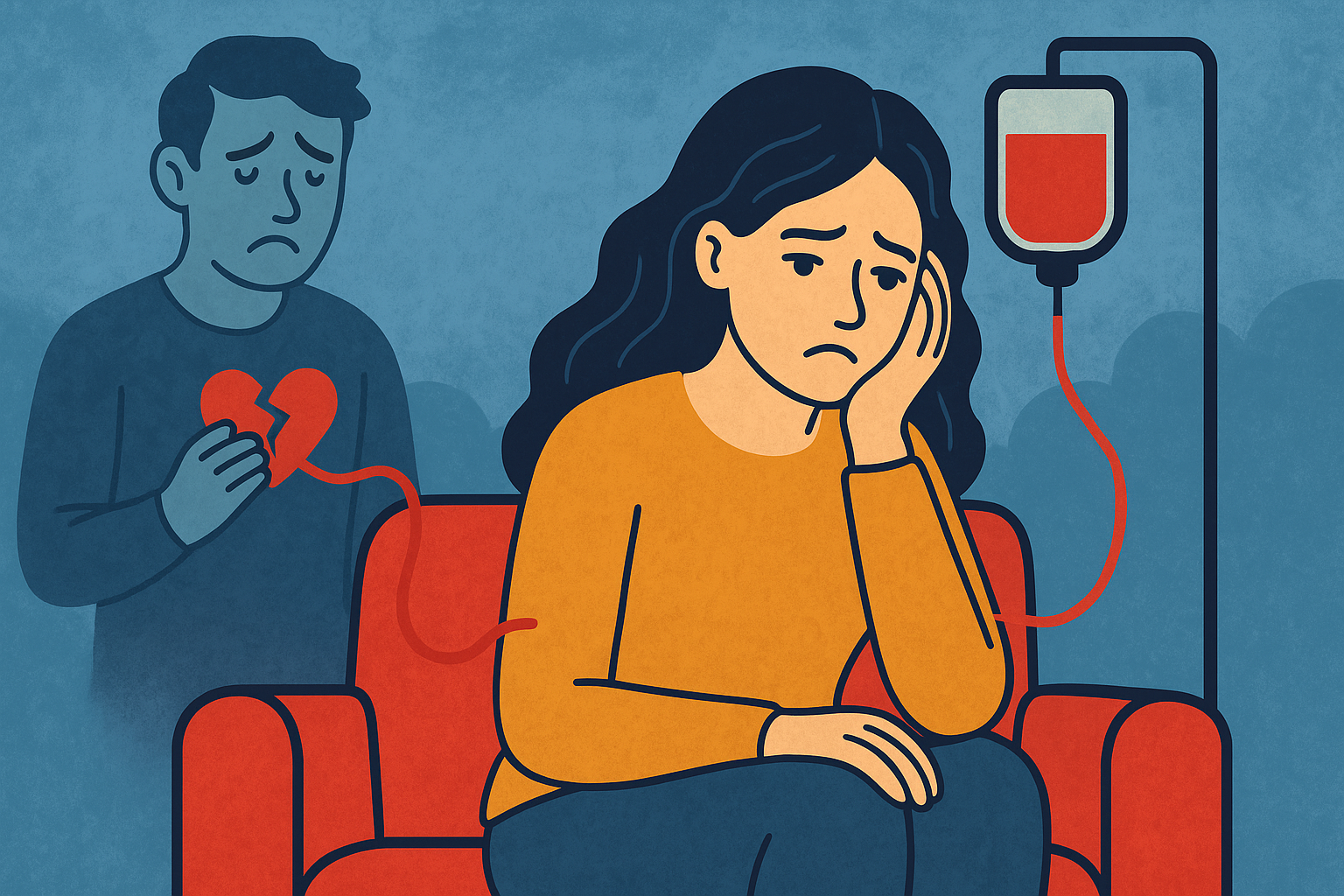
You Keep Attracting ‘Wounded Men’ Who Drain You: How to Break the Fixer Pattern Before It Breaks You

💔 You’re Not His Therapist. You’re Not His Mother. But That’s Who He Turned You Into.

You meet him. He’s soft-spoken. Sensitive.
Maybe he’s been cheated on. Maybe he had a rough childhood.
He talks about his pain. His past. His trauma. His potential.

You feel it — that pull to help. To support. To love him back to life.

But months later…

You’re exhausted.
He’s still broken.
And somehow, you are the one unraveling.

You wonder:

  • “Am I co-dependent?”
  • “Why do I always attract the same type of man?”
  • “Why do I feel like a shell of myself after loving them?”

This post is your mirror — and your exit plan.

You’re not cursed.
You’re caught in a Fixer Pattern — and it’s time to break it before it breaks you.

🩹 Why “Wounded Men” Feel So Familiar (And Why That’s Dangerous)

Let’s name it.

You’re drawn to men who are:

  • Emotionally unavailable
  • Spiritually confused
  • Still grieving their last breakup
  • Unhealed from childhood
  • Financially or mentally unstable
  • But full of “potential”

They love-bomb you with vulnerability.
They open up quickly.
They say you “understand them like no one else does.”

And you do.

Because you were trained to understand people more than you were trained to protect yourself.

🧠 The Fixer Pattern is a Trauma Response — Not a Personality Trait

If you grew up in a household where:

  • You had to emotionally manage adults
  • Your love was conditional on keeping peace
  • You were praised for being “so mature” for your age

… then fixing wounded people became a form of self-worth.

You equated:

“They need me” with “I matter.”

But here’s the truth:

Needing you ≠ loving you.
Depending on you ≠ respecting you.

You’re not broken for attracting wounded men.
But it’s your job now to stop letting them bleed all over you while calling it love.

⚠️ The Real Cost of Fixing Others

When you make someone else your project:

  • You abandon yourself
  • You suppress your needs
  • You become the emotional landfill for their pain
  • You normalize being unloved while overfunctioning

By the time they leave or drain you dry, you:

  • Have health issues
  • Feel emotionally numb
  • Don’t recognize yourself anymore

This isn’t “just a phase.”
It’s energetic self-harm disguised as devotion.

🧭 SOLUTION: How to Break the Fixer Pattern Before It Breaks You

✅ 1. Admit That You’re Addicted to Potential

Say it:

“I’ve been attracted to what someone could be, not who they are.”

Now ask:

“What have I sacrificed in the name of hope?”

Potential is seductive — it’s the fantasy version of a partner.

But real intimacy comes from someone who:

  • Is self-aware, not “on the path”
  • Is emotionally regulated, not just “trying”
  • Can give, not just take

You deserve someone fully formed — not someone you have to spiritually babysit.

✅ 2. Name the Part of You That Needs to Be Needed

The Fixer is often protecting:

  • A scared little girl who learned that being helpful = being safe
  • A teenager who was ignored unless she solved problems
  • A woman who fears abandonment unless she stays useful

Give that part a name.
Write her a letter.
Tell her:

“We’re done saving men. We’re saving you now.”

✅ 3. Create a ‘Love Inventory’ of What You’ve Given Without Being Asked

Write down:

  • The emotional labor you performed
  • The money you gave
  • The times you coached him through his trauma
  • The parts of yourself you dimmed so he wouldn’t feel insecure

Look at it.

That’s not love. That’s emotional servitude.

And you’re not available for that anymore.

✅ 4. Set a New Standard: No More ‘Fixer Projects’

Create a list of non-negotiables:

  • Emotionally available
  • Actively in therapy or already healed
  • Can hold space without making you the therapist
  • Takes responsibility for his life

Now use this as a filter.

Anyone who shows up with “I’ve just been through a lot” and no plan, no accountability, no inner work?

You don’t even engage.

You’re not his mother. You’re not his rehab. You’re not his emotional crutch.

You are a whole woman, and you deserve a whole partner.

✅ 5. Learn to Sit With the Void That Comes After Saying No

When you stop fixing, a void opens.

You might feel:

  • Useless
  • Invisible
  • Like you have “nothing to offer”

That’s the wound surfacing — not the truth.

The truth is:

Your love is not measured by how much pain you absorb.
Your power is not measured by how well you survive him.

Learn to sit in that void.
It’s where your real identity lives.

✅ 6. Find Joy in Being Loved Without Earning It

Fixers are used to love being transactional:

  • You hold him through his trauma
  • You make excuses
  • You clean up the emotional mess
  • Then maybe he says, “I love you”

You’re not doing that anymore.

Your new standard?

Love that:

  • Feels safe
  • Feels reciprocal
  • Feels boring sometimes (because it’s not chaotic)

Let it feel weird.
Let it feel quiet.

That’s not lack — that’s finally enough.

✅ 7. Make a New Rule: If You Feel Drained After Interacting, You Leave

No more spiritual excuses like:

  • “He’s just going through a lot”
  • “I feel bad for him”
  • “He didn’t mean it”

Ask one question after every interaction:

“Did I feel more alive — or more depleted?”

If it’s depleted?

You don’t stay.

Not one more minute.
Not one more excuse.

You leave.

👑 FINAL WORD: You Don’t Have to Earn Love by Saving Broken Men

You don’t exist to be a healing station for unhealed men.
You don’t exist to carry generational trauma on your back while smiling through it.
You don’t exist to shrink into a caretaker role just to be seen.

You are not a nurse. You are not a therapist.
You are not his redemption story.

You are here to love — and be loved — in full return.

And from now on?

No more fixing.
No more bleeding for “potential.”
No more calling it love when it’s just pain wearing intimacy as a mask.

You are done.

Author

  • Brian Ka

    Brian Ka is the creative force behind Fifth Degree, a brand that fuses bold sportswear aesthetics with festival energy and deep Rasta cultural roots. His designs embody the spirit of self-expression, from statement-making brands like In Vein to k-pop blog that celebrate a free-spirited cultural lifestyle. Whether it's high-performance fabrics for all-day wear or styles that embrace Rasta heritage, Fifth Degree exists at the crossroads of fashion and culture. With a keen eye for detail and a passion for innovation, Brian ensures every piece reflects individuality, comfort, and the vibrant energy of those who wear them.

    View all posts

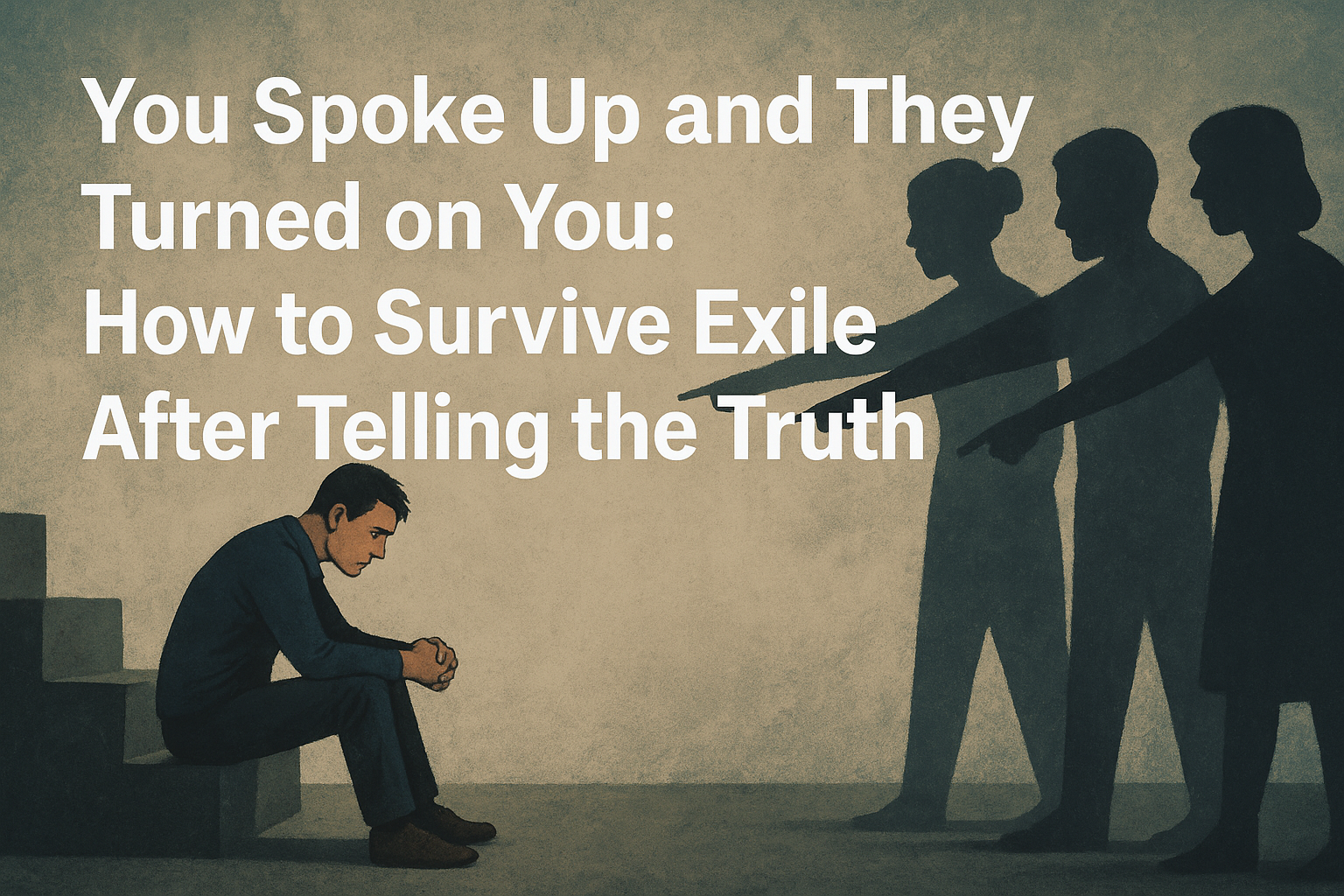
You Spoke Up and They Turned on You: How to Survive Exile After Telling the Truth

You Weren’t Wrong — You Were Just Inconvenient

You told the truth.
Not to be dramatic.
Not to seek revenge.
But because your spirit couldn’t take the silence anymore.

You thought maybe… just maybe… someone would understand.
That your courage would be met with support, or at least human decency.

Instead?

They turned on you.
Ghosted you.
Whispered behind your back.
Protected the abuser.
Pretended it never happened.

Now you’re sitting in the aftermath — isolated, confused, and questioning whether speaking up was a mistake.

But hear this loud and clear:

You weren’t too much — they were too committed to the lie.
You didn’t lose people — you lost access to the ones who were never safe to begin with.

This post is your survival guide for spiritual and emotional exile — for the ones who dared to name what others only dared to protect.

🔥 Why Telling the Truth Feels Like Social Suicide

Because in families, communities, or spiritual circles built on denial:

  • Truth is a threat
  • Pain is seen as drama
  • Honesty gets labeled as betrayal

They don’t hate you because you lied.
They hate you because you saw through the lie and said it out loud.

In systems where:

  • Abuse is normalized
  • Appearance is worshipped
  • Control is masked as healing

… your truth is nuclear.

💣 What You’re Experiencing Is Called “Gaslight-Backlash Exile”

This is the predictable pattern:

  1. You speak up.
  2. They minimize what happened.
  3. You push back — calmly, clearly, or emotionally.
  4. They flip the script and say you’re unstable, bitter, or dangerous.
  5. They rally others. You become the problem.

Congratulations — you’ve been exiled.
But it’s not because you’re broken.
It’s because you’re no longer playing the role they cast you in.

🧭 SOLUTION: How to Survive Exile After Telling the Truth

✅ 1. Affirm What Happened — Over and Over Again

Exile can make you question reality.
You might start to think:

  • “Maybe I overreacted…”
  • “Maybe I misunderstood…”
  • “Maybe I shouldn’t have said anything…”

STOP.
That’s not reflection — that’s manipulation residue.

Write down:

  • Exactly what happened
  • Why it violated you
  • How they responded
  • Why you chose to speak up

This document becomes your reality anchor.

✅ 2. Let the Fallout Happen — Don’t Try to Control It

You may want to:

  • Explain yourself
  • Clear your name
  • “Correct the narrative”

Don’t.

Why?

Because the people who want to understand will find you.
And the people who need the lie will never hear you anyway.

You weren’t exiled because you were unclear.
You were exiled because you were too clear.

Let them whisper. Let them run.
Your job is not damage control — it’s soul recovery.

✅ 3. Stop Wishing They’d Come Around

You’re grieving who they pretended to be — not who they really are.

They may never apologize.
They may never admit it.
They may double down on your character assassination.

Let them.

Closure is not their job. It’s your ritual.

And you’re allowed to move on without it.

✅ 4. Create a Safe Witnessing Space

What you need now is not more healing work — it’s witnessing.

Find or create a space where you can say:

  • “This happened.”
  • “It hurt.”
  • “And I’m still here.”

That can look like:

  • A trauma-informed therapist
  • A journal with no filter
  • A small group or online community of survivors
  • A blog where your voice lives uncensored

You don’t need everyone to believe you.
You just need you to believe you again.

✅ 5. Protect Your Energy Like Your Life Depends on It — Because It Does

Exile makes you energetically vulnerable.

Here’s how to seal your field:

  • Daily grounding (bare feet on Earth, intentional breath)
  • Speak this aloud every morning: “I reclaim my name. I reclaim my light. I release all ties to those who shamed my truth.”
  • Avoid spaces (online or offline) where gaslighters gather
  • Unfollow, block, and cut off psychic cords to the group that exiled you

You are not required to keep doors open to people who voted for your silence.

✅ 6. Redefine Safety Without Nostalgia

Often we stay attached to toxic systems because we crave what they once gave us:

  • A sense of belonging
  • Familiarity
  • Identity

But that’s not safety — that’s survival bonding.

Your new safety will feel unfamiliar at first.

It will feel like:

  • Quiet
  • Boredom
  • Lack of drama
  • Emotional space

Learn to breathe in that quiet. That’s what real safety tastes like.

✅ 7. Write Your Own Legend (Literally)

The exile story they tell about you will never be true.

So write your own:

  • What really happened
  • What it cost you to speak up
  • What you’re reclaiming now

This isn’t content.
This is a sacred archive of your integrity.

One day, someone else who’s afraid to speak will read it — and they’ll find the courage.

You didn’t just survive exile.
You carved a path.

👑 FINAL WORD: Exile Didn’t Break You — It Showed You Who You Really Were

They turned on you because they never saw you — only the version of you that kept their illusion alive.

You didn’t lose family, friends, or community.
You lost access to the roles they needed you to play.

Now?

You’re free.

Maybe bruised.
Maybe lonely.
Maybe still shaking.

But free.

Free to speak.
Free to be seen.
Free to rebuild your life without the weight of pretending.

They’ll say you lost everything.

But we both know —

You finally came home to yourself.

Author

  • Brian Ka

    Brian Ka is the creative force behind Fifth Degree, a brand that fuses bold sportswear aesthetics with festival energy and deep Rasta cultural roots. His designs embody the spirit of self-expression, from statement-making brands like In Vein to k-pop blog that celebrate a free-spirited cultural lifestyle. Whether it's high-performance fabrics for all-day wear or styles that embrace Rasta heritage, Fifth Degree exists at the crossroads of fashion and culture. With a keen eye for detail and a passion for innovation, Brian ensures every piece reflects individuality, comfort, and the vibrant energy of those who wear them.

    View all posts

You’ve Done All the Inner Work But Still Feel Broken: How to Escape the Healing Trap That Was Never Meant to Set You Free

You Meditated, You Journaled, You Forgave — So Why Are You Still in Pieces?

You followed the script.

You:

  • Took the breathwork classes
  • Paid the coach
  • Read the trauma books
  • Went to therapy
  • Forgave your parents
  • Sat with your inner child

And yet…

You still wake up anxious.
You still attract people who drain you.
You still feel like something’s wrong with you — because you’re not healed yet.

They told you healing would make you whole.

So why do you feel more fragmented than ever?

Here’s the brutal truth:

You’re not broken.
But the healing system you trusted? Was never meant to set you free.


💣 THE SYSTEMATIC BETRAYAL: Healing Has Been Turned Into a Hustle

The “healing space” is no longer just a sanctuary — it’s a marketplace.

Your trauma became:

  • A branding opportunity
  • A course funnel
  • A content strategy

You’re taught to endlessly:

  • “Do the work”
  • “Unpack your shadow”
  • “Surrender your resistance”

… all while still staying small, still blaming yourself, still doubting your worth.

Healing became a lifestyle subscription — not a destination.
And you’re stuck in process — because they profit from your pain.


🧠 THE REAL REASON YOU STILL FEEL BROKEN

Because the healing you were offered:

  • Focused on introspection, not protection
  • Encouraged compassion, not discernment
  • Centered forgiveness, not justice
  • Kept you accountable — but let your abusers off the hook

You became so self-aware, you started gaslighting yourself.

“Maybe I’m the toxic one.”
“Maybe I need to work harder on my triggers.”
“Maybe I just need another layer of shadow work.”

No.

You need to opt out.


🔓 ESCAPE PLAN: How to Break Out of the Healing Trap and Actually Start Feeling Free


✅ 1. Redefine What Healing Means for You (And Burn Their Checklist)

Healing doesn’t look like:

  • Crying in circles every weekend
  • Forgiving people who are still hurting you
  • Constantly “doing the work” with no peace in sight

What it can look like:

  • Feeling safe enough to laugh again
  • Letting joy exist without earning it
  • Trusting your own body without overanalyzing every emotion
  • Saying “I’m done healing this part” and walking away

Healing isn’t homework.
It’s a return to wholeness. And wholeness isn’t performance — it’s self-trust.


✅ 2. Stop Trying to Heal Parts of You That Were Always Sacred

Not every wound needs to be dissected.
Some of them need to be witnessed and guarded — not processed endlessly.

You were taught:

  • Empathy = overextension
  • Sadness = something to fix
  • Anger = something to purge

But what if:

  • Your empathy was already enough?
  • Your sadness was a signal, not a flaw?
  • Your anger was a boundary alarm, not a burden?

Sometimes what we call “healing” is just overwriting wisdom with obedience.


✅ 3. Withdraw Consent from “Healing” That Keeps You Powerless

Healing spaces that:

  • Guilt you for being triggered
  • Prioritize spiritual bypassing
  • Expect you to “be love” while being disrespected

… are just gaslighting sanctuaries.

Opt out.

  • Mute the “love and light” voices
  • Stop paying people who make you question your gut
  • Exit communities that treat your pain like a problem to monetize

You don’t need to heal into silence. You need to protect what’s sacred.


✅ 4. Create a “Healed Enough to Leave” List

Ask yourself:

  • What parts of me are healed enough to stop obsessing over?
  • What healing loops am I ready to exit now?
  • What tools have become cages instead of ladders?

Make a list.

  • Write: “I no longer need to revisit _______.”
  • Say: “That part of me is no longer broken. It’s integrated.”

This is your freedom declaration.


✅ 5. Reclaim Pleasure and Rest as Non-Negotiable

Healing told you to rest so you could process.
Now it’s time to rest because you f*cking deserve peace.

  • Take a walk and don’t reflect.
  • Eat and don’t analyze your emotions.
  • Watch a dumb movie and don’t journal about why you liked it.

Your nervous system needs joy, not more self-work.

Let your wholeness be boring, beautiful, and uneventful sometimes.


✅ 6. Build a New Identity Outside of “Healing”

You’ve been “healing” so long, you may not even know who you are without it.

So ask:

  • Who am I when I’m not fixing myself?
  • What lights me up that has nothing to do with trauma recovery?
  • What kind of life do I get to live now that I don’t owe anyone an explanation?

You are allowed to:

  • Be lighthearted
  • Be imperfect
  • Be free without graduating from “the work”

You were never meant to heal into perfection — just into freedom.


🛑 WARNING: You Will Feel “Wrong” for Choosing Peace Over Progress

That’s part of the spell.

You’ve been trained to associate safety with “being in process.”
So when you rest, disconnect, or choose stillness — guilt will creep in.

Don’t fight it. Name it.

Say:

“I no longer identify with constant healing. I choose wholeness now.”

Say it every day. Until your nervous system stops asking for another assignment.


💣 FINAL WORD: You Were Never Broken — You Were Just Trapped in a System That Needed You to Stay Hurt

That system made healing a currency.
It made your trauma a product.
It made your pain a content plan.

But you?
You made it out.

You don’t need to dig deeper to be valid.
You don’t need to forgive louder to be holy.
You don’t need to heal perfectly to be free.

You just need to remember who you were before they convinced you you’re a project.

You’re not broken.
You’re just done.

Let that be enough.

Author

  • Brian Ka

    Brian Ka is the creative force behind Fifth Degree, a brand that fuses bold sportswear aesthetics with festival energy and deep Rasta cultural roots. His designs embody the spirit of self-expression, from statement-making brands like In Vein to k-pop blog that celebrate a free-spirited cultural lifestyle. Whether it's high-performance fabrics for all-day wear or styles that embrace Rasta heritage, Fifth Degree exists at the crossroads of fashion and culture. With a keen eye for detail and a passion for innovation, Brian ensures every piece reflects individuality, comfort, and the vibrant energy of those who wear them.

    View all posts
Back to Top
Product has been added to your cart